

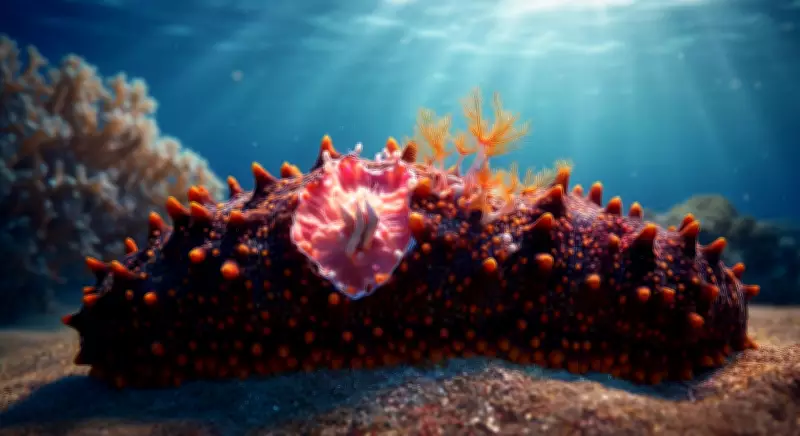
What happens when a piece of flesh is cut off and dropped into the ocean? For almost every animal, including humans, the answer is simple: it dies and decays. But scientists studying a cold-water sea cucumber have now found a strange exception. Severed pieces of tissue from the species Psolus fabricii didn't die at all. Instead, they healed their own wounds, kept growing, and remained biologically active for more than three years in ordinary seawater, with no lab equipment, sterile conditions, or special nutrients involved. Researchers are calling this 'natural tissue immortality,' and they say the discovery could open up entirely new possibilities for regenerative medicine and tissue research.
Scientists Found Zombie Tissue in a Sea Creature That Simply Refuses to Die
The discovery started almost by accident. While conducting routine work in a lab, researchers at Memorial University of Newfoundland were studying a cold-water sea cucumber species called Psolus fabricii. Like many sea cucumbers, this species can deliberately detach parts of its body, such as tube feet or tentacles, as a defence mechanism, similar to how a lizard sheds its tail to escape a predator. Normally, these severed body parts are expected to rot away within days or weeks, especially outside a sterile lab setting. But according to a study published in Science Advances, some discarded tube foot tissue placed in tanks of ordinary flowing seawater simply didn't decay. Instead, researchers noticed the tissue was still attached to the glass weeks later, appeared to be healing at the edges, and even seemed to be growing slightly.
Intrigued, the team decided to investigate further. Over the following years, they ran controlled experiments using tissue taken from the feet, main body, and tentacles of three separate Psolus fabricii individuals, placing the samples in flowing natural seawater with no added nutrients, antibiotics, or sterilisation.

How Psolus fabricii Tissue Kept Growing and Healing in Natural Seawater
What the researchers observed went far beyond simple survival. According to the study, the excised tissue began by clearing away damaged cells at the wound site, then sealed the cut edges, effectively closing itself off from the surrounding environment. Over the following months and years, the tissue slowly reorganised itself into round, translucent blobs of cells, with a core of red pigment at the centre. Tests showed clear signs of cell division, immune activity, and tissue reorganisation, all happening without a mouth, gut, or any other organ to support them.
Despite lacking any way to actively feed, the tissue appeared to absorb dissolved amino acids directly from the seawater around it, essentially feeding itself on whatever nutrients happened to be floating by. According to senior researcher Rachel Sipler of the Bigelow Laboratory for Ocean Sciences, the fact that this happened in messy, microbially rich natural seawater, rather than a sterile lab tank, is what makes the discovery so unusual. The tissue wasn't just surviving despite its environment; it seemed to be thriving because of it.
Why This Sea Cucumber Discovery Could Be a Breakthrough for Tissue Immortality
The experiments eventually ran for more than three years, and researchers say the tissue showed no signs of slowing down, ageing, or dying when they finally decided to end the study and publish their results. Lead author Sara Jobson, a doctoral researcher at Memorial University, has described the finding as the first documented case of tissue immortality occurring under natural conditions.
Crucially, the tissue never developed into a new, complete sea cucumber. Instead, it formed what the researchers call a 'new biological unit,' a self-contained blob of living cells that simply continued existing indefinitely. Since the mid-20th century, scientists have relied on so-called 'immortal' cell lines, most famously HeLa cells derived from human tissue, which can divide indefinitely in carefully controlled laboratory conditions. But even these cell lines have never displayed this combination of independent healing, growth, and movement outside a sterile environment. The team's findings, published on May 27, 2026, mark the culmination of years of patient observation, something the researchers credit to a culture of curiosity-driven science within their lab.

What This 'Zombie' Tissue Means for the Future of Regenerative Medicine
Beyond its strangeness, researchers believe this discovery could have real practical applications. Because Psolus fabricii is an invertebrate, tissue from the species faces far fewer regulatory restrictions than human or other vertebrate cell lines, making it especially useful for laboratories with limited biosafety resources or stricter ethical guidelines around using animal tissue.
According to Andrea Bodnar of the Gloucester Marine Genomics Institute, who was not involved in the study but reviewed its findings, the discovery points toward an entirely new model for studying biological resilience and tissue regeneration, one that scientists previously didn't even know existed in nature. Researchers say the findings could eventually feed into work on wound healing, tissue engineering, and antimicrobial therapies, areas where understanding how cells coordinate repair without external intervention is especially valuable. For now, though, the bigger takeaway may simply be how much remains undiscovered in the ocean, a reminder that even well-studied creatures living just off our coastlines can still hold surprises capable of reshaping entire fields of science.





