Skardu Valley, a stunning mountainous region in the Baltistan Division of Gilgit-Baltistan, Pakistan, holds a Sikh history spanning over four centuries, from Guru Nanak's visit around 1510-1515 to the displacement of the Sikh community after 1947. This legacy is embodied in the ruined Gurdwara Chotta Nankania Sahib, locally known as Asthan Nanak Pir, which marks the site where Guru Nanak and Bhai Mardana stopped on their return from Tibet.
Skardu's Multi-Faith Heritage
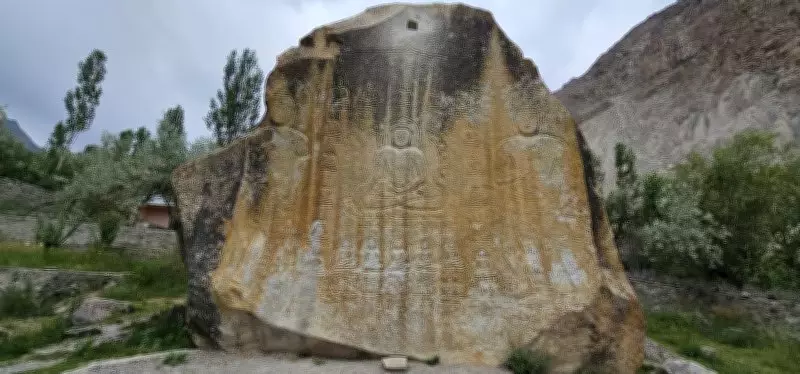
Skardu city lies at the confluence of the Shigar and Indus rivers, locally called Sange Kha Bab or Sine Cho (Lion River). The Baltistan region, known as Baltiyul, has a rich tapestry of indigenous Bonism, Tibetan Buddhism, Sufi Islam, Sikhism, and Hinduism. Rock carvings, such as the 9th-century Manthal Buddha Rock depicting a meditating Buddha with Tibetan inscriptions, testify to its Buddhist past. Tibetan script is still used by Muslim Baltis to write the local Balti language, which retains about 30% Tibetan vocabulary, earning the region the moniker "Little Tibet."
Guru Nanak's Visit and the Gurdwara
According to Sikh tradition, Guru Nanak visited Skardu with Bhai Mardana around 1510-1515. The gurdwara built in the late 1800s included a Diwan Hall, Langar Hall, and Dharamsal. Today, only the crumbling Dharamsal remains; the Diwan and Langar halls have vanished. The site, managed by Pakistan's Northern Light Infantry, is closed to the public. Shops below the complex are used by local Muslim traders.

Sikh Settlement Under Dogra Rule
The Baltistan region came under the Sikh Empire in 1840 when Dogra General Zorawar Singh conquered it at the Battle of Kharpocho Fort. After 1846, the Dogras ruled under British suzerainty. From the late 19th century, Dogra rulers actively settled Sikhs from Punjab and Hindu traders from Jammu, expanding Sikh presence into valleys like Shigar, Khaplu, and Bilamik. Influential Khatri families helped commerce flourish. Local elders fondly recall Sikh and Hindu neighbors.
Community Contributions and Displacement
Two well-known Sikh families, Gangu and Lassu, donated land in the early 20th century for Imam Bargahs (Shia mourning places) in Skardu city. After partition in 1947, these families left for India, but the Shia Muslim communities of Gangupi and Lassupi Mohallas still remember their generosity. According to the 1941 census, Skardu and surrounding areas were over 99% Muslim but had a prosperous minority of Sikh and Khatri Hindu traders.
Current Status and Legacy
No local Sikh population remains in Skardu. Sikhs from Khyber Pakhtunkhwa or other parts of Pakistan who visit for business are often unaware of the deep Sikh roots in the region. The ruined gurdwara stands as a poignant reminder of a once-thriving community that contributed to Skardu's cultural mosaic for over 400 years.