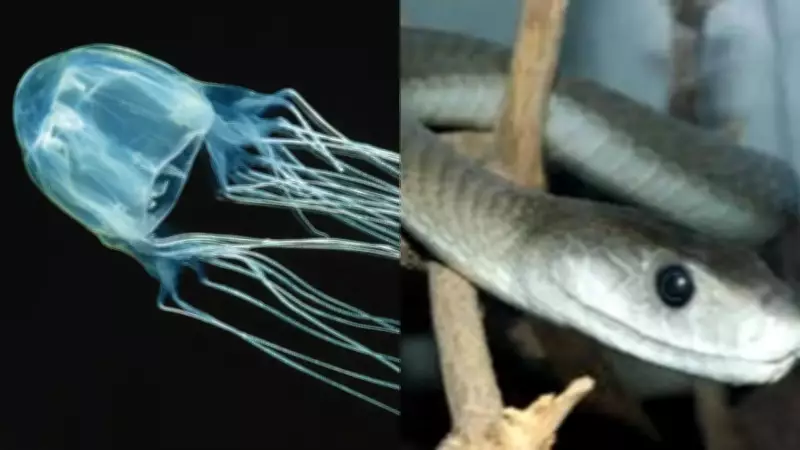
The inland taipan is widely regarded as the most venomous snake in the world, but several other creatures possess toxins of comparable potency. From ocean dwellers to amphibians, these animals can cause severe harm or death with a single sting or bite. Here are six of the most venomous creatures that rival the inland taipan.
Box Jellyfish
The box jellyfish is considered one of the deadliest marine animals. Its tentacles contain venom that simultaneously attacks the heart, central nervous system, and skin cells. Without immediate medical treatment, victims may experience shock or cardiac arrest within minutes. Some researchers argue that the box jellyfish's venom is as lethal as that of many venomous snakes.
Eastern Brown Snake
While the eastern brown snake does not match the inland taipan in venom toxicity, it is considered more dangerous to humans because it often lives near populated areas. Its aggressive nature and potent venom make it a significant threat in Australia.

Poison Dart Frog
Although technically poisonous rather than venomous, poison dart frogs produce some of the most potent toxins known. Indigenous peoples have historically used the frogs' skin secretions to coat hunting darts. The golden poison dart frog, for example, carries enough toxin to kill ten adult men.
Blue-ringed Octopus
Despite its small size, the blue-ringed octopus is extremely lethal. Its venom contains tetrodotoxin, a powerful neurotoxin that can paralyze a human and cause respiratory failure. There is currently no known antidote for its venom, making it one of the most dangerous cephalopods.
Cone Snail
Cone snails appear harmless but use a harpoon-like tooth to inject venom. Certain species, such as the geography cone snail, produce toxins that can cause paralysis and respiratory failure. Divers refer to it as the "cigarette snail" because victims have only enough time to smoke one cigarette before succumbing to the venom.
Dubois' Sea Snake
Dubois' sea snake is one of the most venomous sea snakes, with potent venom that can paralyze prey and affect the nervous system. It inhabits coastal waters around Australia and Papua New Guinea. Despite its high toxicity, it rarely poses a threat to humans due to its shy nature.
These creatures demonstrate that venom potency is not exclusive to snakes. From the ocean to the rainforest, nature has evolved a variety of organisms with powerful toxins capable of causing serious harm. Understanding these animals helps highlight the importance of caution and respect for wildlife.