

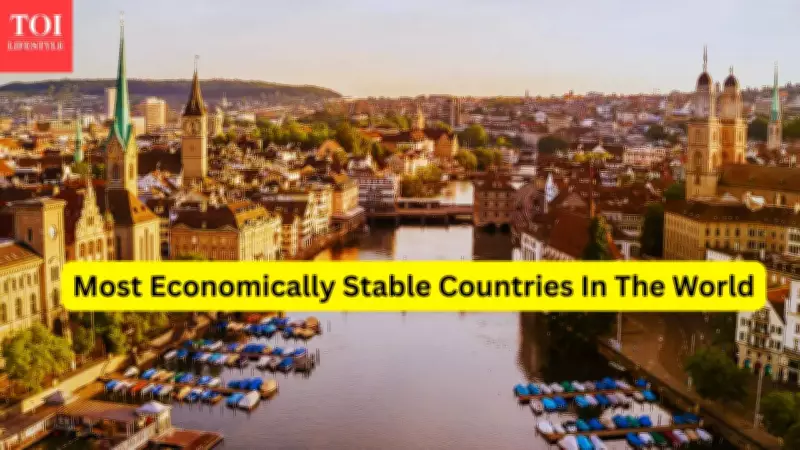
Economic stability is a factor that most travelers do not give much consideration when planning their holiday destination. However, it plays a significant role in the overall experience. Stable economic factors include well-maintained transport, modern technology, and digital transactions. In many cases, stable economies result in very easy and comfortable tourist destinations.
The following is the list of the world's most economically stable countries in 2026 according to the rankings published by U.S. News & World Report. Below is what a traveler should expect during their stay in these destinations.
United Arab Emirates - 1
The UAE has developed into one of the most economically confident countries on Earth. Cities such as Dubai and Abu Dhabi are characterized by their futuristic and ultramodern nature. Traveling in this country is extremely smooth thanks to immaculate roads, state-of-the-art airports, cashless economies, and top-class tourist infrastructure. Public areas also reflect economic confidence with massive malls, artificial islands, and luxury tourism.

Switzerland – 2
Switzerland epitomizes economic stability. Everything runs smoothly and efficiently. Trains run like clockwork, mountain villages are impeccably clean, and public systems operate flawlessly. Upon arrival, travelers quickly realize how expensive it can be, but the cleanliness, safety, and infrastructure are impressive.
Germany – 3
Germany remains the economic powerhouse of Europe. The efficiency of its railway systems, cities, and preservation of historic centers amid technological prowess make travel a delight. Berlin offers artistic flair and nightlife, while Munich provides prosperity and Bavarian charm. Smaller towns show how infrastructure and public services are seamlessly integrated into daily life.
Canada - 4
Economic stability in Canada is apparent through its cleanliness, institutions, and laid-back urban atmosphere. Traveling through Toronto, Vancouver, and the Rocky Mountains is comfortable. The country strikes an excellent balance between contemporary urbanity and vast wilderness. Travelers observe good road conditions, public amenities, easy access to healthcare, and overall social stability.
Japan - 5
Japan exhibits a perfect balance of advanced technology and exceptional social order. Economic discipline is evident in the railway system, automated facilities, and organized public areas. Despite being one of the most active nations, cities like Tokyo and Osaka operate smoothly. Convenience stores, public transportation, and clean townships are easily accessible, making Japan one of Asia's least stressful destinations.
Australia - 6
Travelers see well-developed modern cities and infrastructure in Australia. Roads are in good condition, and tourism infrastructure for outdoor activities is well-developed. Sydney and Melbourne offer urban interest, while the Great Ocean Road in Victoria and Queensland's coasts feature efficient tourist infrastructure.
Sweden - 7
Sweden is highly developed and efficient. Stockholm gives visitors a good feeling with smart sustainable practices, payment methods, city planning, public transportation, and services. It is even possible to enjoy nature right from the city center.
Denmark – 8
Denmark is one of the happiest and most stable nations globally. Copenhagen is clean and easy-going, with a special atmosphere for cyclists. Public services work smoothly. Travel provides a comfortable experience as infrastructure functions effortlessly, thanks to Danish commitment to sustainability, urban planning, and design.
Netherlands – 9
The Netherlands combines prosperity and good urban planning. While Amsterdam is a main attraction, the country's efficiency is more impressive. Cycling facilities, effective trains, efficient airports, and connectivity make traveling simple.
Saudi Arabia – 10
Saudi Arabia's entry in the top 10 stems from economic change and significant investment initiatives. Tourism infrastructure is growing rapidly due to the kingdom's increasing openness. Tourists find modern highways, extensive urban development, luxurious hotels, and interesting projects related to Vision 2030.

India – 47
Despite being ranked 47th for economic stability, the tourism experience in India is much more diverse than the number implies. Unlike other stable countries that focus on predictability and order, India offers intensity and dynamism. Tourists can enjoy sophisticated metro systems in some cities but face infrastructure problems in others. Luxury hotels coexist with dynamic bazaars, cultural heritage, congested railway stations, and rapidly developing cities.





