In the spring of 1974, on a parched field outside Xi'an, Yang Zhifa and his brothers were desperate for water. A punishing drought had gripped northern China, so with nothing more than shovels and hope, they began digging a well near their tiny village in Shaanxi province. They expected, or perhaps prayed for, a trickle of groundwater to save their crops. But what they pulled from the earth was nothing short of extraordinary.
Unearthing the Terracotta Army: What Exactly Happened?
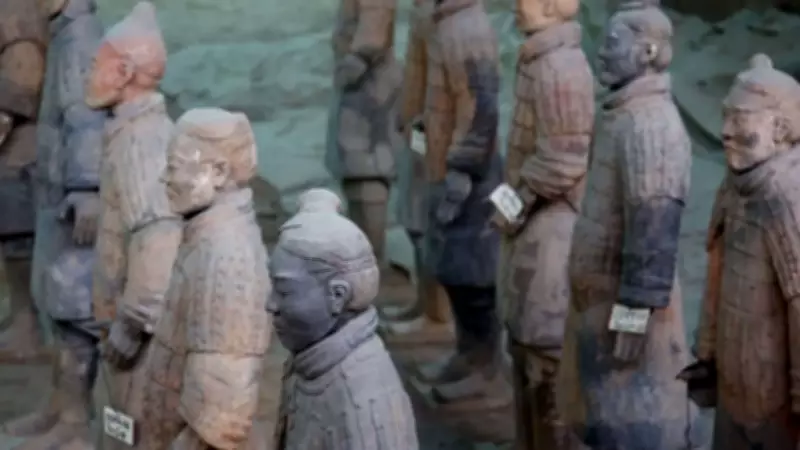
According to the BBC, as the brothers dug deeper, chunks of pottery and pieces of human-shaped clay began to surface. Initially, the family assumed they had stumbled upon old local graves, a common occurrence in this ancient land. However, as they continued, the discoveries grew stranger: clay heads, torsos, weapons, and limbs, all lifelike and scattered through the dirt. This was no ordinary tomb. They had uncovered the Terracotta Army, a vast underground storehouse of thousands of fired-clay warriors, standing guard for over 2,000 years over the tomb of China's first emperor, Qin Shi Huang.
This accidental discovery did not just change their lives; it revolutionized archaeology and transformed that remote patch of Shaanxi into one of the world's most significant historical sites. Yang Zhifa and his brothers could not have known the jackpot they had hit. As broken fragments piled up, someone alerted local authorities. Soon, a team of archaeologists arrived at the edge of their wheat fields. It did not take long for experts to realize this was not an average burial.

The Scale and Detail of the Army
Row after row of soldiers emerged from the ground, arranged in military formation as if awaiting orders. There were infantry, archers, commanding officers, chariots, and even horses, each carved with incredible detail. No two faces were identical. Some appeared young, while others looked wise and battle-worn. Even their hairstyles varied. Researchers determined that this clay army was created around 210 BCE for Emperor Qin Shi Huang, the ruler who unified China, established the Qin dynasty, and left a legacy as both a hero and a harsh dictator. He standardized currency, writing, and roads while undertaking monumental projects that brought both glory and suffering.
The Terracotta Army was part of Qin's plan for eternal rule. Even in death, he demanded protection. Thus, an entire army was built for the afterlife to ensure his power never waned. The sheer scale of the site is staggering. Experts estimate there are more than 8,000 soldiers, along with hundreds of horses, chariots, and other figures, many still unexcavated. The layout mimics a real army, with infantry, cavalry, and officers in formation. Archaeologists have found bronze weapons beside the warriors, remarkably well-preserved, indicating the advanced metallurgy of the Qin dynasty. The statues were originally painted in bold reds, blues, and greens, but exposure to air has faded most colors, leaving them as earth-toned ghosts.
Historical Context and Global Impact
Historians had some inkling of a grand burial site based on ancient records, particularly those of Han dynasty historian Sima Qian, who mentioned the emperor's giant mausoleum. However, no one anticipated a life-sized army. The discovery provided the world with a glimpse into Chinese engineering, imperial ambition, and artistry from over two millennia ago. It became more than an archaeological dig; it was proof of a society that could marshal thousands of workers with incredible efficiency to create one of the most extravagant burial complexes ever conceived. The Terracotta Army quickly became a cultural icon and a point of national pride for China.
The site near Xi'an was transformed into a vast archaeological park and museum. UNESCO declared it a World Heritage Site in 1987, calling it a masterpiece of realism and history. Today, millions of visitors flock to see the silent soldiers each year.

Ongoing Mysteries and Future Research
The story is far from over. After five decades of excavation, many mysteries remain. The actual tomb of Emperor Qin lies untouched beneath its mound. Chinese authorities have been cautious, fearing damage if opened prematurely. Ancient texts describe rivers of mercury within the burial chamber, and modern tests have detected high mercury levels in the area. Additionally, how did artisans create so many unique figures so quickly? Evidence suggests an ancient assembly line: mass-producing bodies while customizing faces and details by hand. Some archaeologists consider it one of humanity's first experiments in industrial-scale art.
As for Yang Zhifa, the farmer who started it all, he became a minor celebrity. He signed books, met museum visitors, and remained connected to the find that changed his life. All because his family needed water. It is remarkable how digging for survival led Yang and his brothers to unearth a hidden empire, transforming their lives in ways they could never have imagined.