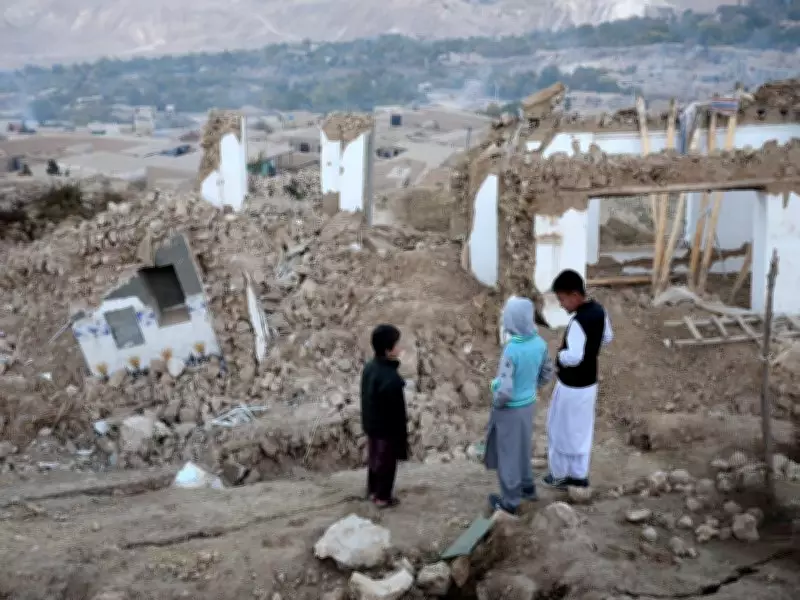
An earthquake of magnitude 5.5 struck Afghanistan on the night of July 1, 2026, according to the National Center for Seismology (NCS). The earthquake occurred at 11:27 PM Indian Standard Time (IST) at a depth of 173 kilometers, with its epicenter located at latitude 36.443 N and longitude 70.391 E in Afghanistan. The NCS shared the details on social media platform X, stating, 'EQ of M: 5.5, On: 01/07/2026 23:27:00 IST, Lat: 36.443 N, Long: 70.391 E, Depth: 173 Km, Location: Afghanistan.'
No Immediate Reports of Damage or Casualties
As of early morning on July 2, there were no immediate reports of damage or casualties resulting from the earthquake. The tremor, which occurred in the Hindu Kush region, is part of a pattern of frequent seismic activity in Afghanistan. The country lies in a highly active seismic zone due to its location along the collision boundary between the Indian and Eurasian tectonic plates. A major fault line also runs through parts of the country, including the Herat region.
Afghanistan's Vulnerability to Natural Disasters
The United Nations Office for the Coordination of Humanitarian Affairs (UNOCHA) has noted that Afghanistan remains extremely vulnerable to natural disasters, including earthquakes, landslides, and seasonal flooding. Repeated tremors exacerbate the challenges faced by communities already struggling with decades of conflict and limited development, leaving them with minimal resilience to withstand multiple shocks. The earthquake serves as a reminder of the ongoing seismic risk in the region.

Comparison with Venezuela Earthquake Aftermath
Meanwhile, rescue and relief operations continue in Venezuela following a deadly twin earthquake last week that has left over 1,900 people dead, according to official sources reported by CNN. National Assembly President Jorge Ramirez announced on Tuesday that at least 1,943 had died, an increase of about 200 from the previous day. However, the casualty figure is believed to be much larger, with the US Geological Survey indicating a high likelihood that tens of thousands are dead. CNN reported that the United Nations' Resident and Humanitarian Coordinator in Venezuela, Gianluca Rampolla, said on Monday that the Venezuelan government and the UN are procuring 10,000 body bags in anticipation of more deaths. In La Guaira, survivors continued to pick through rubble, while a government excavator stood idle due to a lack of gasoline, highlighting the logistical challenges in the disaster response.