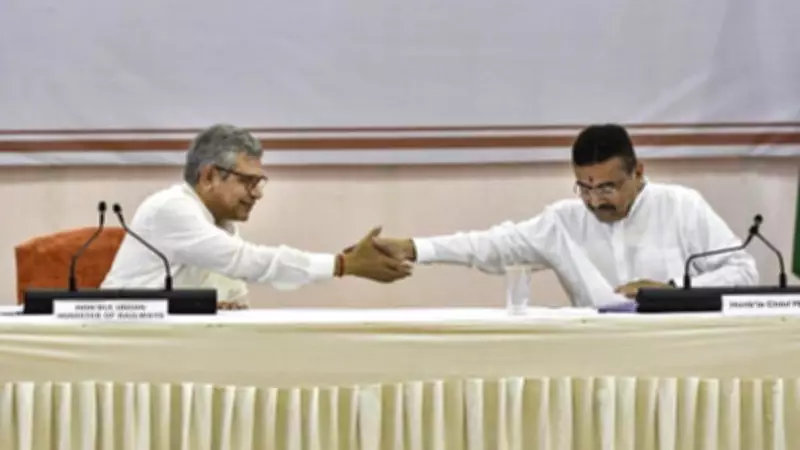
Union Minister Ashwini Vaishnaw announced on Saturday that sixty next-generation trains will be introduced for the Kolkata Metro over the next five years. The minister made the announcement during a press conference in Kolkata, highlighting the government's commitment to modernizing urban transportation in the city.
Modernization of Kolkata Metro
The new trains are expected to feature advanced technology, improved energy efficiency, and enhanced passenger comfort. Vaishnaw stated that the induction of these trains would significantly increase the frequency and capacity of metro services, easing congestion for daily commuters. The Kolkata Metro, which began operations in 1984, is one of the oldest metro systems in India and has been undergoing gradual upgrades.
Bullet Train Proposals
In addition to the metro expansion, Vaishnaw also provided updates on proposed bullet train services. He confirmed that the Delhi–Varanasi and Varanasi–Siliguri high-speed rail corridors are in the planning stages, aimed at sharply reducing travel time between these cities. The Delhi–Varanasi route is expected to cut travel time from the current 8–10 hours to under 3 hours, while the Varanasi–Siliguri corridor would connect the holy city with the northeastern region more efficiently.

The minister emphasized that these projects are part of a broader vision to transform India's railway infrastructure, with a focus on speed, safety, and sustainability. He also mentioned that feasibility studies and land acquisition processes are underway for the bullet train corridors.
Political Context
The announcement comes amid ongoing political discussions in West Bengal, with local leaders like Suvendu Adhikari advocating for improved infrastructure. Vaishnaw's statement is seen as a response to growing demands for better public transport in the state. The minister assured that the central government is working closely with state authorities to expedite these projects.
Vaishnaw concluded by reiterating the government's dedication to enhancing connectivity and economic growth through modern rail networks. The sixty next-generation trains for Kolkata Metro are expected to be rolled out in phases, with the first batch arriving within two years.