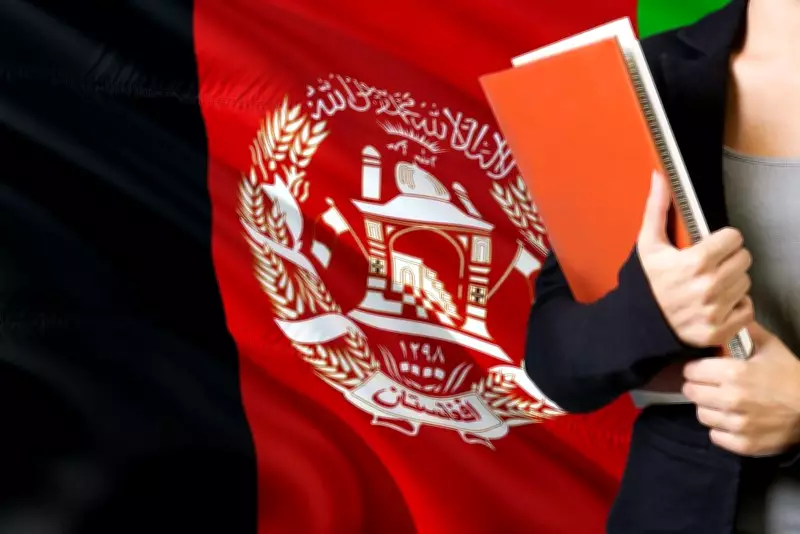
Imagine spending decades building a career. You have a master's degree, have taught hundreds of students, and walk into work every morning with purpose. Then, almost overnight, the gates close. You are told you cannot return, not because of anything you did, but simply because you are a woman.
This is the reality for female academics across Afghanistan after the Taliban returned to power in August 2021. Interviews were conducted with 12 Afghan female academics via Telegram and WhatsApp. Eight were still in Afghanistan, four had recently left. Of those in Afghanistan, only one has since managed to leave; the rest remain. Their accounts are devastating.
The Collapse of Progress
When the Taliban first ruled Afghanistan between 1996 and 2001, women were barred from education and most employment. After the US-led intervention, conditions slowly improved. Female participation in higher education surged from 5,000 students in 2001 to over 100,000 in 2021. Women constituted 28% of university students and 14% of academic staff. Progress was real, though fragile. Then it was reversed almost entirely.

By December 2022, all universities had closed their doors to women. Girls' education was banned beyond age 12. Women were prohibited from most jobs, required to have a male guardian for travel, and forced to wear a black hijab in public. Afghanistan now ranks 181 out of 193 countries on the Human Development Index.
Personal Devastation
The women interviewed did not describe their situation in abstract political terms but in deeply personal ones. One lecturer with over 20 years of experience stated: "Living under the power of the Taliban as a woman is a gradual death. I feel like I'm dying every day. I've lost everything — neither my knowledge nor my education is valuable anymore."
Another, who had taught for three decades, said the happiest moments of her life were in the classroom: "I like to go out of the house, teach, and see my students. This situation is like a gradual death for me."
These are not just expressions of sadness. Ten of the 12 participants described significant psychological distress. All 12 reported feelings of disappointment and despair. One woman described losing her entire sense of self: "I lost my job, position, honour, credibility, and societal personality."
Losing work is hard anywhere, often cutting a family's income in half. But in Afghanistan, the consequences extend far beyond lost income. One participant explained: "Women's presence in society decreased, and their social interactions and connections with society became almost non-existent."
The Taliban also banned online education. Private universities that offered remote classes were ordered to stop. For academics hoping to continue teaching digitally, even that door was shut.
Islamic Feminism: A Framework for Resistance
In the research, the experiences of female academics in Afghanistan were analyzed through the lens of Islamic feminism. Since the 1990s, researchers have studied Muslim societies to understand gender inequality, leading to the development of Islamic feminism — a movement supporting women's rights and gender equality within an Islamic framework.
As Afghanistan is a Muslim country, this movement offers a powerful framework for gender justice, challenging both patriarchal religious interpretations and Western feminist views often seen as culturally alien. It may seem strange to discuss feminism within an Islamic framework when the Taliban claim to enforce Islamic law, but that is precisely the point.
Based on arguments from feminist scholars, the Taliban's restrictions on women have nothing to do with genuine Islamic teachings and are instead linked to political control. The Quran supports women's rights to education, economic participation, and engagement in public life. Therefore, the restrictions can be understood as a distortion and misuse of religious texts to justify patriarchal power.
Islamic feminism holds that the problem is not Islam, but the way certain men have interpreted it to serve their own interests. For Afghan women, this matters enormously. A framework rooted in their own faith, rather than imported from the West, gives them a way to resist that feels authentic and grounded.

Uncertain Future, Unbroken Spirit
The women have not given up. Some are finding quiet ways to keep teaching. Others use social media to stay connected. Many hope international pressure will eventually force change.
One participant summed up the uncertainty: "It's like we're at a crossroads; all the paths are dark. One path is concrete, another is muddy, and one has pitfalls. We can't discern the paths; all of them are dark and uncertain. So, I can't make a specific plan because it's unpredictable."