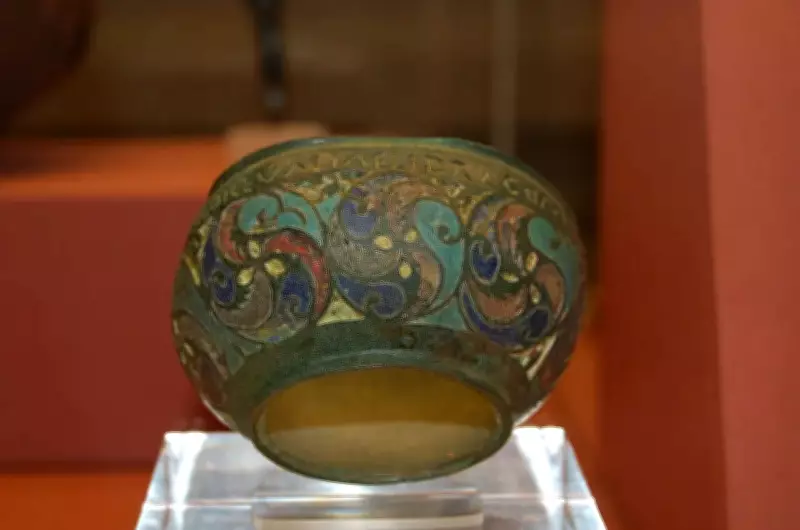
Long before the age of digital photography and refrigerator magnets, the Romans had their own unique way of commemorating their travels. In 2003, an amateur archaeologist using a metal detector uncovered an ornate metal artifact buried beneath the soil while surveying a field in the Staffordshire Moorlands. From a distance, the object could have been mistaken for a kitchen utensil or scrap metal from a broken bronze cauldron. However, once the dirt was scraped away, it revealed elaborate enamel designs and cryptic inscriptions. This unique artifact is now known as the Staffordshire Moorlands Pan.
Discovery That Changed Historical Perspectives
The discovery prompted historians to reconsider their understanding of life on the outskirts of the Roman Empire. Not only was the pan used for practical purposes such as drinking and cooking, but it was also created to commemorate a journey to a specific location. In many ways, it resembles the sophisticated souvenirs people buy today when traveling to various places, serving as a tangible reminder of what they experienced.
Miniature Map of Hadrian's Wall in Enamel
What makes this discovery truly remarkable is the inscription around the upper rim of the vessel. According to research titled Living on the Edge: The Staffordshire Moorlands Pan and Life Along Hadrian's Wall, the names of four forts located at the western end of the wall are listed: Banna, Camboglanna, Uxelodunum, and Maia. These names form a geographic itinerary of the area. The design features elegant whorls in the so-called "Celtic" style, with colors such as blue, red, and yellow. As noted on the website of the British Museum Collection, such decorative elements became highly fashionable in second-century northern Britain. The fusion of Roman names in Latin with local artistic techniques demonstrates a fascinating cultural blend, presumably indicating that the item was created for someone who viewed their stay at the frontier as an important event worthy of celebration through luxury items.

A Little Pan That Adds a Human Dimension to a Vast Empire
When thinking of the Roman Empire, we often imagine imposing stone structures, military tactics, and war campaigns. In contrast, the Staffordshire Moorlands Pan provides insight into a completely different side of history—one that is rarely captured by massive fortifications. The discovery of this pan is unique; according to the Portable Antiquities Scheme discoveries report, only three or four vessels of this kind have ever been found. The fact that the pan was discovered in Staffordshire, a considerable distance from Hadrian's Wall, indicates that the artifact traveled. It likely accompanied someone moving south, away from the frontier, perhaps returning home or being transferred to another location. This illustrates that for every soldier assigned to guard duty in a solitary tower, there were individuals with memories, lives, and histories beyond the fortress walls.
Legacy and Display
Today, the Staffordshire Moorlands Pan is shared among several major museums, where it continues to fascinate visitors with its bright colors and tiny, perfect lettering. It serves as a reminder that the objects we choose to keep reveal much about who we are. Just as we might keep a postcard or a shell from a beach, a Roman traveler once looked at this pan and remembered the wind-swept hills of the northern frontier. The amazing thing is that although the Roman Empire eventually declined and its magnificent fortresses crumbled to rubble, this little cup remained intact amid the muck. It outlived the very structures it was meant to memorialize.
The Staffordshire Moorlands Pan stands as a testament to the enduring human desire to commemorate experiences, bridging the gap between ancient and modern travelers.