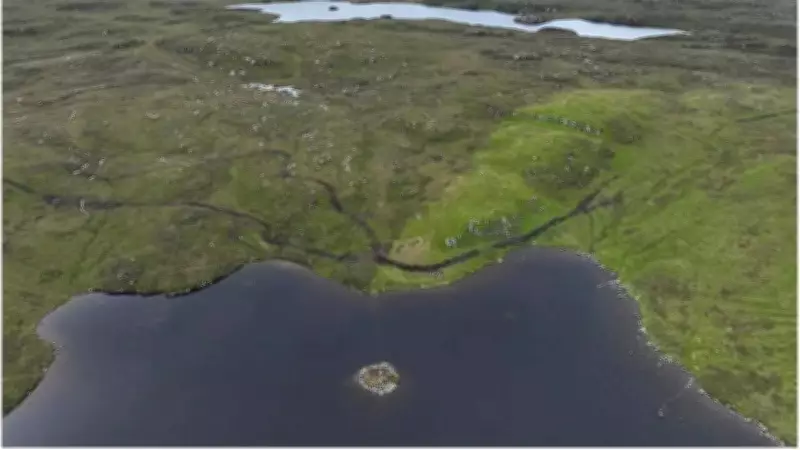
A remarkable archaeological discovery in the depths of Loch Bhorgastail, Scotland, is reshaping our understanding of prehistoric human existence. This ancient structure, now appearing as a small stone island, was originally a wooden platform meticulously constructed by Neolithic people over 5,000 years ago. Its age surpasses that of iconic landmarks like Stonehenge, challenging conventional views about the engineering capabilities and settlement patterns of early societies.
Unveiling the Hidden Crannog
From the outside, the structure seems unremarkable. However, beneath the surface lies evidence of careful construction, multiple uses over time, and transformations through various prehistoric periods. Archaeologists consider it one of the finest examples of ancient human ability to shape the environment. This site is classified as a crannog—a man-made island found in lakes and lochs. Previously, crannogs were primarily associated with the Iron Age and later periods, but recent discoveries suggest earlier origins.
A study led by experts from the University of Southampton and the University of Reading dated this particular crannog to between 3800 and 3300 BCE, placing it firmly in the Neolithic period, before Stonehenge was built. Initial analysis reveals that the crannog originally consisted of a round wooden platform about 23 meters in diameter. Its construction involved multiple layers of wood, brushwood, and stones to secure the foundation. Over time, the island was expanded and improved, with evidence of modifications during the Bronze Age and Iron Age.

Pottery Fragments and Neolithic Life
Archaeological surveys have uncovered large quantities of Neolithic pottery fragments around the site. Some vessels contain traces of food residues, indicating cooking or food preparation activities. This detail changes the interpretation of the site: it may not have been purely symbolic or defensive but could have functioned as a gathering place where people met, shared meals, and engaged in communal activities. Experts suggest it held both practical and social importance.
The idea of building and using a timber island in the middle of a loch seems unusual today, but in the Neolithic world, such spaces may have offered a sense of separation from everyday land-based life. Water boundaries often carried meaning in ancient cultures, possibly marking transitions between different social or ritual spaces. However, much of this remains speculative, as the evidence provides clues but not complete answers.
Hidden Causeways and Advanced Survey Techniques
Among the most intriguing finds are subterranean stone causeways connecting the island to the mainland. These indicate that access to the island was once easier and possibly managed. Over millennia, water level fluctuations flooded parts of the structure, separating what was once a contiguous landscape. Investigating such landscapes poses challenges, as the area between dry land and deep waters is difficult to survey with traditional land-based methods or underwater techniques alone.
To overcome this, scientists combined underwater photography, drone-based photogrammetry, and GPS measurements. This integrated approach compensated for the limitations of individual methods and produced an accurate 3D reconstruction of the area, including both dry land and submerged parts.
This discovery not only pushes back the timeline of crannog construction but also highlights the complexity of Neolithic societies. Their ability to build durable structures in aquatic environments and adapt them over centuries underscores their ingenuity and social organization.