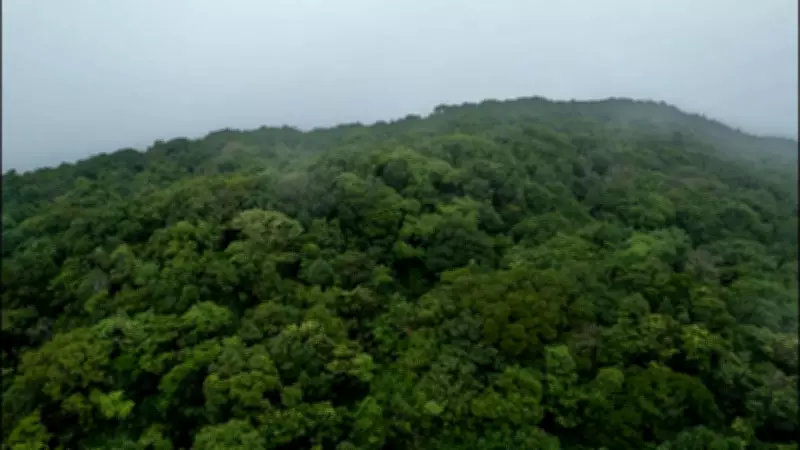
A recent field study conducted by researcher Subodh Naik has confirmed that Avachitgad is Goa's second-highest peak, with an elevation of 891 meters above mean sea level. The study combined Portuguese-era maps with modern global positioning system (GIS) mapping techniques.
Location and Significance
Avachitgad is situated within the densely forested areas of Caranzol village in Sattari, inside the Mhadei Wildlife Sanctuary. This peak is part of the Western Ghats region in Sattari. Previously, Catlachimauli was believed to be the second-highest peak, and Vaguriem the third, based on a study published in the Goa Gazetteer in 1979, edited by V T Gune, former director of archives and archaeology of the Union territory of Goa, Daman and Diu. That document had recorded Sonsogor as Goa's highest peak.
Research Methodology
Naik explained, "After studying the maps of the Portuguese era and personally visiting Sonsogor, Avachitgad, and other peaks in Sattari, Sanguem, and Canacona, and calculating the height through modern equipment and interacting with locals, I found that Avachitgad is the second-highest mountain peak of Goa." He added that Tulsi Dongar at 883 meters and Ravan Dongar at 862 meters are other high peaks in the region.

Gajanan Shetye, a wildlife enthusiast from Keri who was part of the visiting team, said, "After crossing the streams of Karkacho and Dabacho vhal and through arduous hiking from Viranzol, we reached Padangi Sawad of Caranzol and studied the summit of Avachitgad along with the boulders of Mudyacho guno that helped us determine the height of the peak."
Historical and Ecological Importance
Avachitgad also shares borders with Tambdi Surla in Dharbandora, from where an old pathway leads to the ghat region capital of Palasika (Halshi), associated with the Goa Kadamba queen Kamaladevi and known as Ranichi paaz. According to locals, Dipaji Rane, a valiant fighter who revolted against the Portuguese in 1852, used to take shelter in the natural fort while engaging in guerrilla warfare.
Suryakant Gaonkar from Bhuipal of Sattari, who also visited the area, said, "This hill has the finest patches of evergreen forest, providing refuge to a variety of wild animals like tiger, leopard, sloth bear, as well as reptiles, birds, and butterflies."