

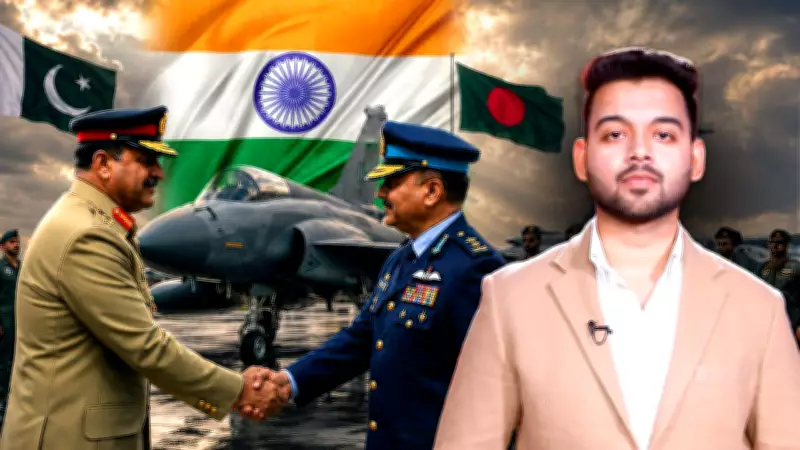
Bangladesh's growing military engagement with Pakistan is drawing significant attention in New Delhi as discussions around the Pakistan-China-backed JF-17 fighter jet programme gather momentum. The recent transfer of JF-17 simulators from Pakistan to Bangladesh may not immediately alter South Asia's military balance, but the symbolism behind the move is being closely watched by India. For the first time in decades, Dhaka and Islamabad appear to be moving toward structured defence cooperation after years of limited engagement shaped by the legacy of the 1971 Liberation War.
Context of the Defence Engagement
The development comes at a time when Pakistan continues to battle economic instability and repeated IMF bailout programmes, while Bangladesh is navigating political recalibration after its 2024 transition. Yet despite their respective challenges, both countries are expanding defence engagement involving Chinese-backed military technology near India's eastern flank. Indian analysts believe the bigger concern is not Pakistan alone, but China's expanding strategic footprint in South Asia through defence partnerships and military supply chains.
JF-17 Programme and Comparisons with Tejas
The JF-17 programme, jointly developed by Pakistan and China, has also reignited comparisons with India's indigenous HAL Tejas fighter jet. Many defence experts consider the Tejas superior in avionics, radar systems, maneuverability and flight safety, although the JF-17 has advantages in operational history and export reach. While India remains militarily and economically dominant in the region, New Delhi sees the Bangladesh-Pakistan thaw as a reminder that South Asian geopolitics is becoming increasingly competitive and transactional.

India's strategic community is closely monitoring these developments, as the partnership between Bangladesh and Pakistan could potentially alter the regional balance. The JF-17 simulators, while not a direct military threat, signify a warming of ties that could lead to deeper cooperation in the future. This is particularly concerning for India given China's role in backing the JF-17 programme and its broader ambitions in the region.
As Bangladesh and Pakistan move towards structured defence cooperation, India is reassessing its own strategic posture. The evolving dynamics in South Asia underscore the need for India to maintain its military edge and engage diplomatically to counterbalance the influence of China and its allies. The coming months will be crucial in determining how these relationships evolve and what implications they hold for regional security.






