

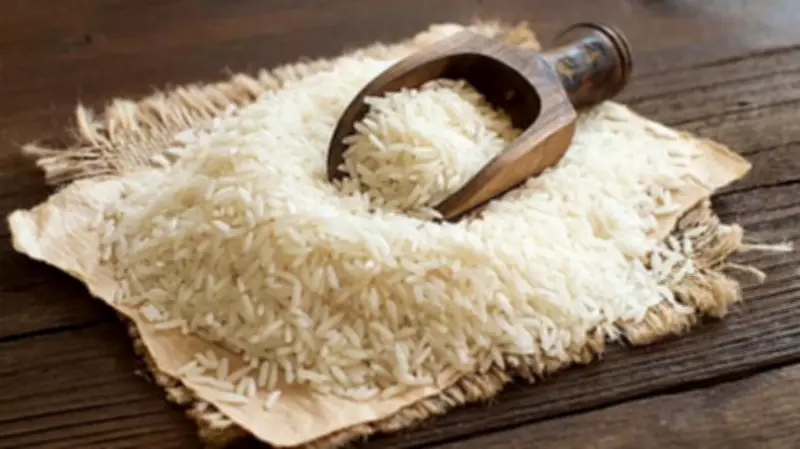
The Basmati Rice Farmers & Exporters Development Forum (BRFEDF) has called on the Indian government to address the arbitrary shipping charges imposed on exports amid the escalating West Asia crisis. The forum highlighted that war-risk surcharges by shipping lines have ranged from USD 800 to USD 6,000 per container, severely impacting the competitiveness of Indian basmati rice in global markets.
Impact of War-Risk Surcharges
The BRFEDF, in a representation to the Ministry of Commerce and Industry, noted that the surcharges are being levied arbitrarily without any standardized formula. This has led to a significant increase in export costs, making Indian basmati rice more expensive compared to competitors from Pakistan and other origins. The forum urged the Centre to initiate dialogue with shipping lines and international bodies to regulate these charges.
Call for Government Intervention
Exporters have requested the government to classify basmati rice as an essential commodity and provide subsidies or freight equalization support to mitigate the impact. They also sought intervention at the diplomatic level to ensure safe passage for cargo ships through conflict zones. The BRFEDF emphasized that without immediate action, India's basmati rice exports could face a severe downturn, affecting millions of farmers and traders dependent on the industry.

Background of the Crisis
The West Asia crisis, involving tensions between Iran and Israel, has disrupted maritime trade routes, particularly through the Strait of Hormuz and the Red Sea. Shipping companies have imposed war-risk surcharges to cover insurance and security costs, which have been passed on to exporters. The situation has also led to delays and cancellations of shipments, further straining the supply chain.
The BRFEDF represents over 500 exporters and thousands of farmers across major basmati-growing states like Punjab, Haryana, Uttar Pradesh, and Jammu & Kashmir. India is the world's largest exporter of basmati rice, with annual exports worth over USD 4 billion. The crisis threatens to undermine years of market development and brand building.
Industry Concerns
Exporters have reported that some shipping lines are demanding advance payment of surcharges, while others are refusing to accept bookings for West Asia destinations. This has created uncertainty and forced many small exporters to halt operations. The forum has urged the government to explore alternative shipping routes and negotiate with insurance companies to reduce premiums.
In addition to the surcharges, exporters are facing increased container shortages and rising freight rates across all routes. The cumulative effect is a sharp rise in the cost of Indian basmati rice, which is already facing stiff competition from Vietnam and Thailand in non-basmati segments. The BRFEDF has warned that if the situation persists, India's market share in key destinations like Iran, Iraq, Saudi Arabia, and the UAE could erode significantly.
Government Response
So far, the Ministry of Commerce has acknowledged the issue and assured exporters that it is in touch with shipping lines and the Ministry of External Affairs. However, no concrete measures have been announced. The BRFEDF has demanded a time-bound action plan, including the possibility of capping war-risk surcharges and providing financial relief through the Merchandise Exports from India Scheme (MEIS) or similar incentives.
The forum also suggested that the government consider temporary suspension of certain export duties or taxes to offset the increased logistics costs. With the crisis showing no signs of abating, exporters are pinning their hopes on swift government intervention to safeguard the industry.






