

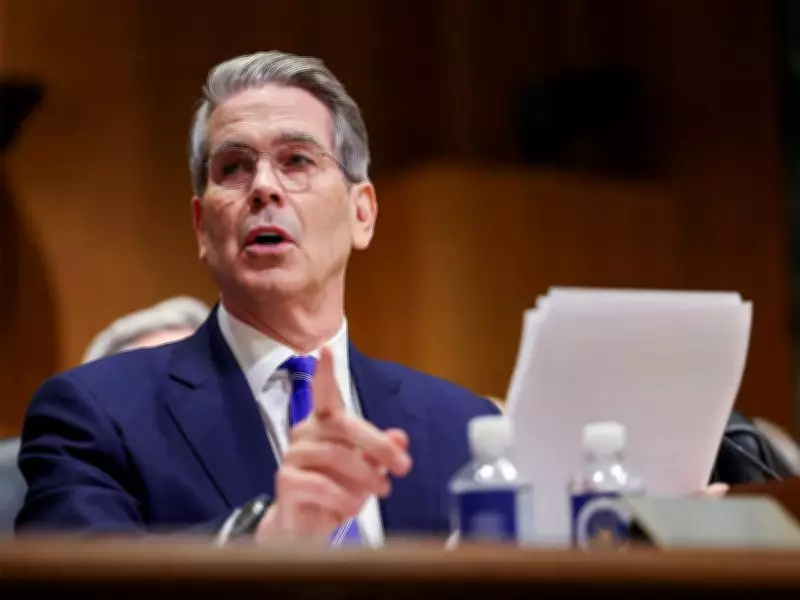
US Treasury Secretary Scott Bessent has launched a sharp attack on China, accusing it of funding what he described as the largest state sponsor of terrorism—Iran. In a strongly worded statement, Bessent called on Beijing to use its influence to help reopen the strategic Strait of Hormuz, a vital waterway for global oil shipments.
Bessent's Accusations Against China
Speaking at a press conference, Bessent asserted that China's financial dealings with Iran directly undermine global security. He stated, 'China continues to be the primary financier of Iran, the world's largest state sponsor of terrorism. This cannot go unanswered.' The US Treasury chief emphasized that Washington expects Beijing to take concrete steps to curb its support for Tehran.
Strategic Importance of the Strait of Hormuz
The Strait of Hormuz, connecting the Persian Gulf with the Gulf of Oman, is a critical chokepoint for approximately 20% of the world's oil supply. Recent tensions in the region have threatened freedom of navigation, prompting the US to seek international cooperation. Bessent urged China to leverage its economic relationship with Iran to ensure the strait remains open for maritime traffic.

China has not yet officially responded to Bessent's remarks. However, analysts suggest that Beijing may resist pressure, given its close energy and trade ties with Iran. The US has previously imposed sanctions on entities involved in Iranian oil trade, but China remains a major buyer.
Implications for US-China Relations
This latest criticism adds to the growing list of disputes between the two superpowers, ranging from trade imbalances to technology competition. Bessent's comments signal a tougher US stance on Iran-related issues, potentially complicating diplomatic efforts. Meanwhile, the Biden administration continues to push for a renewed nuclear deal with Iran, though negotiations have stalled.
The Treasury Secretary's call for China's help also highlights the delicate balance of power in the Middle East. With the US reducing its military presence in the region, Washington is increasingly relying on diplomatic and economic levers to maintain stability. Whether Beijing will cooperate remains uncertain, but the pressure is mounting.






