

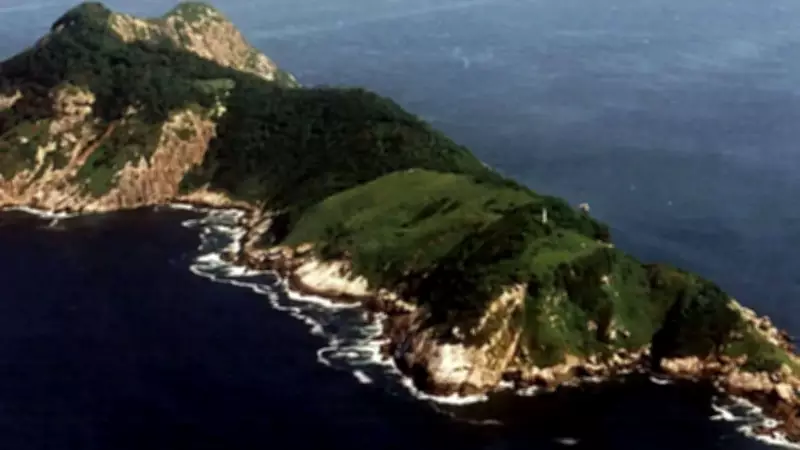
There are places of paradise — beautiful islands with white sand beaches, coconut trees, and luxury resorts. And then there is Brazil's Ilha de Queimada Grande, which is better known as Snake Island, a place so dangerous that the government has banned people from visiting it. However, what you cannot access offline finds its online fanbase. On the internet, this Snake Island off the coast of Brazil is legendary: a place packed with venomous snakes, spooky tales, abandoned lighthouses, pirate legends, and enough drama to spawn documentaries, conspiracy theories, and endless debates — mostly from folks who boast, "I could survive there for ten minutes." Trust me, most would not last.
But beneath all the nightmare fuel is a wild scientific and historical story. Climate shifts, odd evolutionary twists, pirate myths, and one of the world's deadliest snakes all play a part.
Ilha de Queimada Grande: What Exactly Is It?
According to the BBC Wildlife Magazine, Ilha de Queimada Grande sits about 33 kilometers off São Paulo's coastline. It is small, with only around 43 hectares, but it is famous worldwide as one of the planet's most dangerous spots. The story goes way back. Scientists say that about 11,000 years ago, when the last Ice Age ended, rising seas isolated the island from Brazil. Snakes stranded there had nowhere to go.

Over centuries, these snakes evolved differently from their mainland cousins. The star species? The golden lancehead pit viper: Bothrops insularis. With few mammals to eat, these snakes began hunting birds. Their venom became super potent, killing birds almost instantly before they could fly off.
Yes, it is as scary as it sounds. The golden lancehead's bite causes tissue destruction, internal bleeding, kidney failure, and severe necrosis. It is supposedly many times stronger than the venom of mainland relatives.
Rumors have it that there are "five snakes per square meter." Actual scientists figure it is more like 2,000 to 4,000 snakes total on just a tiny patch of land — still sounds wild, right?
How Did the Island Get Its Name?
Well, "Queimada" means "burned" in Portuguese. Early settlers tried to clear land for banana farms by burning it, and the name stuck as "Island of the Great Burn."
Did Humans Ever Try to Occupy This Tiny Island?
Turns out, they did try living there. In 1909, Brazil built a lighthouse. For a while, lighthouse keepers and families braved the island. But by the 1920s, snake numbers became impossible to handle. The lighthouse was automated, and people moved out.
However, despite being deserted by humans, the legends kept growing. There are stories about lighthouse keepers attacked at night, fishermen who landed looking for bananas and never came home, and other spooky tales. Most cannot be verified, but they shaped the island's folklore.
Today, it is one of the most mysterious and spooky places on Earth. The Brazilian government strictly protects Snake Island. Ordinary people are not allowed; only scientists, conservationists, and Navy personnel visit, and even then, only with special permission. The rule keeps both humans and the snakes safe.
Researchers take this opportunity to study the golden lancehead's venom for medical potential. Some snake venoms have already helped develop drugs for blood pressure and heart conditions. Scientists wonder if Bothrops insularis venom might lead to new breakthroughs.
However, unfortunately, the island's fame attracts wildlife smugglers, too. Because golden lanceheads live nowhere else, collectors pay big bucks for them on the black market.
Snake Island off the coast of Brazil is a legitimate obsession, and rightfully so. The snakes here are unlike any others, creating a bizarre ecosystem. There are popular documentaries on this tiny island, and social media forums are full of "could you survive?" threads. But scientists point out the real story is not just horror — it is evolution.
In fact, Ilha de Queimada Grande is a live science experiment, showing what happens when a species is cut off for thousands of years.






