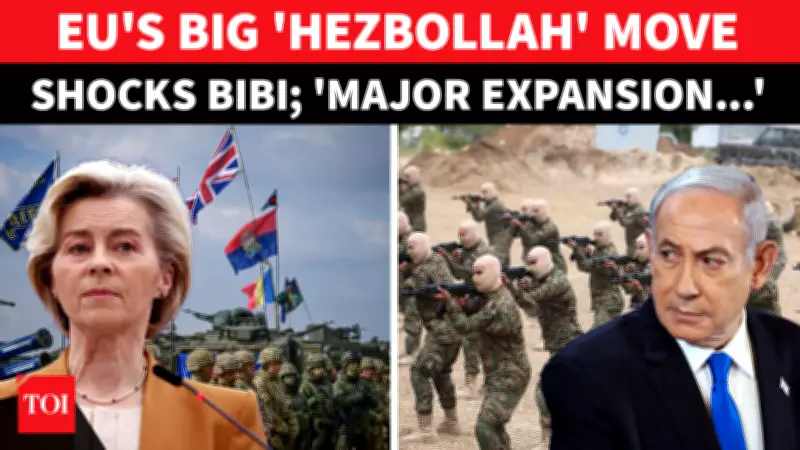
The European Union has unveiled a major €100 million military aid package for Lebanon, a move that has sent shockwaves through Israeli Prime Minister Benjamin Netanyahu's administration as tensions between Israel and Hezbollah continue to threaten a fragile ceasefire. The funding is aimed at strengthening the Lebanese Armed Forces, expanding border security, boosting surveillance capabilities, and reinforcing state control in regions where Hezbollah maintains significant influence.
Details of the EU Aid Package
The €100 million package represents one of the largest EU military aid initiatives in the region. It is designed to enhance the capacity of the Lebanese Armed Forces to secure borders, monitor activities, and assert state authority in areas traditionally dominated by Hezbollah. The funding will also support surveillance technology and training programs to improve operational effectiveness.
Impact on Israel-Hezbollah Dynamics
The announcement comes at a critical juncture, with a fragile ceasefire between Israel and Hezbollah hanging in the balance. Israeli officials have expressed concern that strengthening the Lebanese military could inadvertently bolster Hezbollah, which has deep roots within Lebanon's political and security apparatus. Netanyahu's office has not yet issued an official statement, but sources indicate growing unease over the EU's decision.

Regional Reactions
Lebanese officials have welcomed the aid, viewing it as a step toward reclaiming sovereignty and reducing Hezbollah's influence. Meanwhile, Iran, a key backer of Hezbollah, has criticized the move as an attempt to undermine resistance against Israel. The United States has remained silent on the matter, though it has historically supported the Lebanese Armed Forces as a counterbalance to Hezbollah.
Broader Implications
This development underscores the complex geopolitical landscape in the Middle East, where international efforts to stabilize Lebanon often clash with Israeli security concerns. The EU's move could also influence upcoming diplomatic negotiations and potentially reshape the balance of power in the region.