

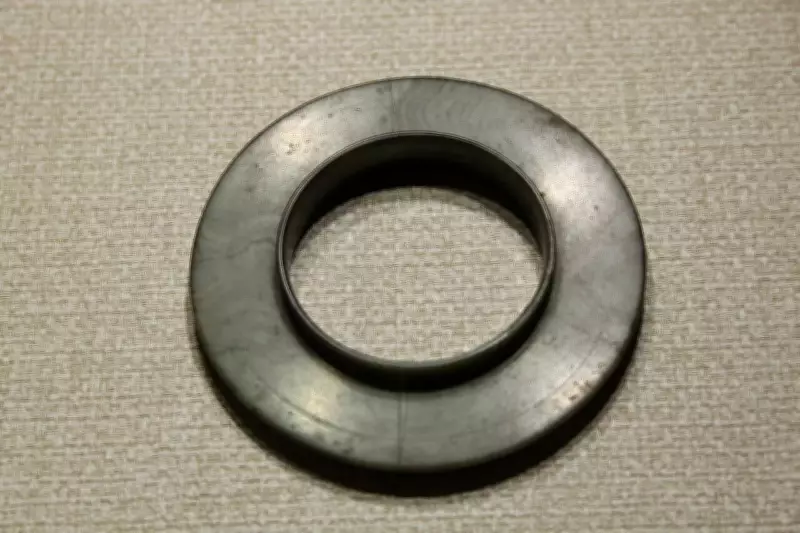
In some cases, the greatest secrets of human history are not discovered by scholarly groups with maps and satellites but simply by common folks in their everyday activities. In 1929, a Chinese man named Yan Daocheng was working amidst the scorching heat in Sichuan Province, China. The task he had undertaken involved removing the mud from an irrigation channel to provide the crops with a constant source of water. As his shovel sliced deep into the thick, wet sludge, it clanged against a hard underground deposit. Expecting a stubborn rock, he reached into the muck, only to pull out a beautifully carved, smooth green stone.
This particular item was an example of a blade carved out of ancient jade. Yan and his family proceeded to dig around the vicinity, and soon enough, they found a collection of more than 400 ancient pieces of jade that had been buried there for thousands of years. Without knowledge of the significance of their discovery, they dispersed the pieces among their local community. Years passed before professional scholars became aware that such a humble farm find was actually the first line of a grand tale that now goes by the name of the Sanxingdui Ruins, one that is widely recognized across the globe.
Redefining Boundaries of the Bronze Age Map
As a matter of fact, the very accidental discovery of these rocks revolutionized the whole sphere of modern historical research since it contradicted the popular myth regarding where Chinese civilization originated. According to a farmer's find that sheds new light on ancient Chinese civilization, as reported by the South China Morning Post, further excavations resulted in the discovery of a great, fortified city of the Bronze Age, which belonged to a highly developed and unique culture called the ancient Shu Kingdom. For generations, mainstream history books confidently asserted that the cradle of Chinese civilization was strictly confined to the Central Plains surrounding the Yellow River. The sophisticated urban landscape found in Sichuan proved that multiple highly advanced cultures were thriving simultaneously across the region.

As highlighted in a comprehensive museum report published by China Daily titled "Museum Showcases Vital Clues To Past," the architectural scale of the site includes immense rammed-earth city walls, specialized workshop districts, and complex drainage systems. This information proved beyond a doubt that Sanxingdui was far from a distant trade station or a small colony, but an extremely well-organized, powerful, and independent kingdom that had achieved a high level of development of casting technology comparable to its northern neighbors.
The Strange Art of a Completely Extinct Civilization
However, it took place only in 1986 when workers, working on construction near the site, stumbled upon huge pits buried underground that contained many thousands of purposeful deposits. While the artistic designs found in the Central Plains were geometrical and conventional for that time, the finds of Sanxingdui were truly out of this world. Among the numerous bronze items buried there, there were large bronze trees, life-size human images, and huge bronze masks with bulging eyes and elongated ears. Linguists and historians observed that such designs were constructed to reflect the figures of deified ancestors, former kings, and shamans belonging to a religious cult worshipping nature. As the kingdom vanished without a trace after thousands of years in the valley, they left behind their holy artistry in the ground, along with no written documentation of their rituals.
However, nowadays, these fascinating artifacts are kept in specially constructed exhibition buildings, which attract millions of foreign tourists who want to gaze into the eyes of an awakened past. The lasting importance of the location will serve as a wonderful testament to how our knowledge about antiquity is constantly subject to change. In addition, it serves as a wonderful example of how remarkable advancements in science do not necessarily require large funds or carefully organized exploratory expeditions. Sometimes, all one needs to make a groundbreaking discovery is simply hard work and a keen eye.

About the Author: The TOI Science Desk stands as an inquisitive team of journalists, ceaselessly delving into the realms of discovery to curate a captivating collection of news, features, and articles from the vast and ever-evolving world of science for the readers of The Times of India. Consider us your scientific companion, delivering a daily dose of wonder and enlightenment. Whether it's the intricacies of genetic engineering, the marvels of space exploration, or the latest in artificial intelligence, the TOI Science Desk ensures you stay connected to the pulse of the scientific world. At the TOI Science Desk, we are not just reporters; we are storytellers of scientific narratives. We are committed to demystifying the intricacies of science, making it accessible and engaging for readers of all backgrounds. Join us as we craft knowledge with precision and passion, bringing you on a journey where the mysteries of the universe unfold with every word.





