

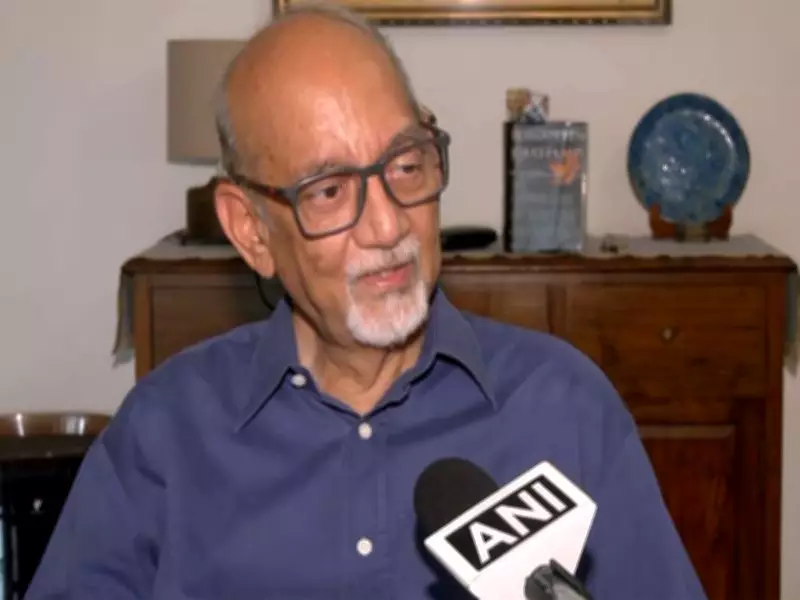
Former Indian Ambassador to Iran, Dinkar P Srivastava, has strongly condemned Islamabad for manipulating the electoral framework in Pakistan-occupied Jammu and Kashmir (PoJK) to control political outcomes, as widespread protests sweep the region over the suppression of democratic rights.
Core Constitutional Trigger Behind Protests
Speaking to ANI, Srivastava, a veteran diplomat and author of Forgotten Kashmir: The Other Side of the Line of Control, explained that protesters are demanding the immediate abolition of "refugee seats" within the PoJK legislative assembly. These seats, comprising about 25 percent of the total, are supposedly reserved for refugees from the Kashmir Valley. However, the outcome of elections in these seats is entirely in the hands of the federal government in Islamabad.
"This block of 25 per cent of seats is used by Islamabad to bring the party of its choice to power in PoK, which completely distorts the electoral mandate. That is the reason for this anger," said Srivastava.

Demographic Manipulation and Governance Crisis
Srivastava pointed out that very few of these designated refugees actually reside within PoJK, with most scattered across wider Pakistan. By granting voting rights to non-residents, Islamabad erases the distinction between the local population of PoJK and the citizens of Pakistan, opening the floodgates for deliberate demographic change—a strategy Pakistan has actively pursued.
The diplomat noted that the unrest spotlights a profound crisis of governance. "The protests this time touch a fundamental issue of governance, which is based not on the wishes of the people of PoK but on the wishes of Islamabad, and more particularly Rawalpindi, where the Pakistan Army headquarters is located," he added.
International Condemnation and Crackdown
The internal political manipulation has been compounded by severe state-sponsored suppression on the ground. Amnesty International issued a strong condemnation of Pakistan's sweeping crackdown on the peaceful demonstrations, accusing authorities of using excessive force, suppressing dissent, and violating fundamental human rights ahead of upcoming regional elections.
Amnesty criticised the decision to designate the Jammu and Kashmir Joint Awami Action Committee (JKJAAC) as a "proscribed organisation" under anti-terrorism legislation, describing the move as unlawful and disproportionate, and a serious attack on freedom of association and peaceful political activism.






