

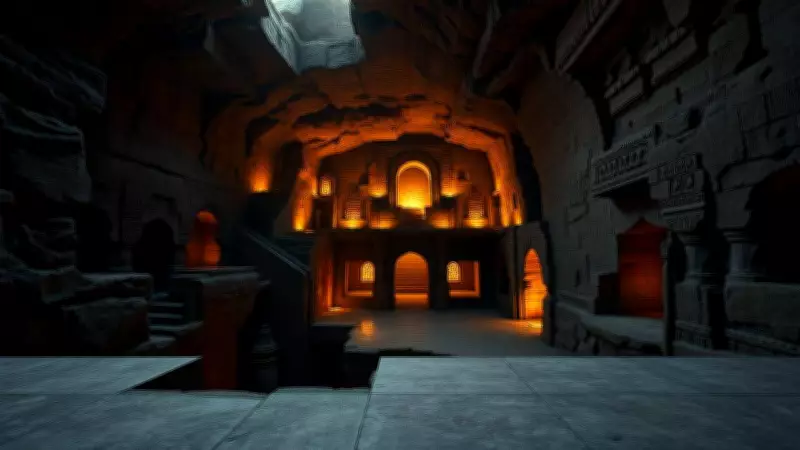
In 1963, a homeowner in Turkey's Cappadocia region embarked on a routine renovation, only to uncover one of the most astonishing archaeological discoveries of the 20th century. While taking a sledgehammer to a basement wall, he noticed a strange gap that led to a dark, carved passage descending deep into the earth. This was no mere cavity; it was the entrance to Derinkuyu, a vast underground city that once thrived with thousands of inhabitants.
An Underground Feat of Engineering and Survival
As exploration progressed, the full scale of the underground infrastructure became apparent. According to the Turkish Ministry of Culture and Tourism and the Derinkuyu Archaeological Site archives, the city extends 85 meters deep across several layers. It includes residential zones, horse stables, prayer rooms, and communal spaces. The soft volcanic rock, known as tuff, allowed ancient builders to carve enormous rooms without compromising structural integrity. They also constructed giant stone wheels to seal doorways, demonstrating advanced engineering skills.
The Discovery documentary series, This Ancient Underground City Could Accommodate 20,000 People, highlights the city's capacity to house an entire town, including animals and food supplies for months. The architects designed ventilation systems that circulated fresh air from the bottom to the top, ensuring adequate oxygen for all residents regardless of their depth within the city.

Historical Lessons from the Lost Civilisation
Derinkuyu's discovery reshaped our understanding of human perseverance. For centuries, inhabitants of the Cappadocia region faced attacks and invasions. Instead of fleeing, they utilized natural resources to construct a hidden city. The layout reflects deep community cooperation, with kitchens and wells placed in remote areas to prevent water poisoning. This underground world offers a unique perspective on survival architecture, revealing a hidden chapter of history within ordinary walls.
As noted in National Geographic's feature Why the cave cities of Turkey's Cappadocia are best explored on foot, walking through these tunnels reveals layered history. Different civilizations, from the Phrygians to early Christians, adapted and expanded the city to meet their needs. The story of the 1963 renovation reminds us that history is not only found in books or remote peaks but often hidden within the very walls we call home.
Today, Derinkuyu stands as a testament to the ingenuity of our predecessors. They were not merely survivors but highly ingenious architects who created entire worlds in the most unexpected places. For history lovers and casual visitors alike, the mystery behind the basement door continues to fuel curiosity and wonder.






