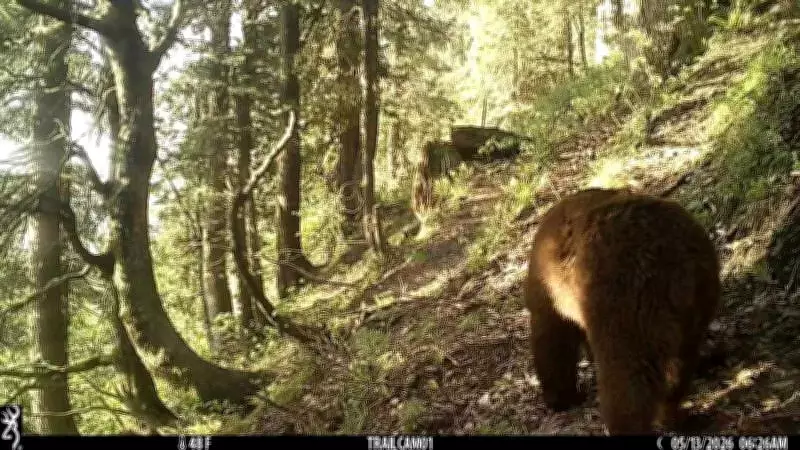
For the first time since the notification of the Gamgul Siyabehi Wildlife Sanctuary in Chamba in 1974, wildlife authorities have obtained conclusive evidence of the presence of the Himalayan brown bear (Ursus arctos isabellinus). Photographic and video evidence of four brown bears has been captured, marking a significant milestone for wildlife conservation in the region.
Official Confirmation and Details
Divisional Forest Officer (DFO), Wildlife, Chamba, Kuldeep Singh Jamwal, confirmed on Thursday the presence of four Himalayan brown bears in the sanctuary, including two males, a female, and a cub. While the existence of the species in the sanctuary had been presumed for years, the wildlife department had never before obtained any definitive evidence of their presence.
Sanctuary Characteristics and Bear Behavior
The sanctuary is situated at elevations ranging from 1,800 to 3,900 meters. Jamwal explained that although Himalayan brown bears belong to the order Carnivora, they are essentially omnivorous in nature. Their diet includes plant matter such as berries, roots, herbs, and grasses, while they also prey on insects, larvae, and large mammals whenever available. The bears undergo hibernation during the winter months, generally from the end of November until March.

The district already has a notable population of Himalayan brown bears in the Kugti, Tundah, and Sechu Tuan Nala wildlife sanctuaries.
Human Activity and Coexistence
Jamwal further pointed out that a road passing through the sanctuary is regularly used by pilgrims traveling to the Manimahesh shrine, local residents, and nomadic tribes migrating to the adjoining Doda district of Jammu and Kashmir along with their livestock. Despite the continuous human movement through the area, no incidents of human-wildlife conflict have been reported from the sanctuary in recent years.
Biodiversity in the Sanctuary
In the 108.4-square-kilometre sanctuary, brown bears are thriving in the upper reaches, while black bears are commonly found in the lower areas. Both species are surviving and flourishing well. Other wildlife found in the sanctuary includes ghoral, musk deer, sambar deer, common leopard, red fox, and several important pheasant species. Last year, the department also recorded the presence of the Western Tragopan (Jujurana), the state bird of Himachal Pradesh.