In a shocking incident that has sent ripples of fear through the minority community, a prominent Hindu businessman was brutally murdered in broad daylight in central Bangladesh. The victim, identified as Anupam Chandra Saha, was fatally shot by unidentified assailants, raising serious questions about the security of religious minorities in the country.
The Daylight Attack in Madaripur
The tragic event unfolded on the morning of Thursday, May 23, 2024, in the Madaripur district, approximately 80 kilometers from the capital, Dhaka. According to police reports and local witnesses, Anupam Chandra Saha, a 45-year-old businessman, was ambushed near his home in the Kulpuddi area of Madaripur Sadar upazila.
Initial investigations suggest that Saha was on his way when two men on a motorcycle intercepted him. Without any provocation or altercation, one of the pillion riders opened fire. The assailants shot Saha directly in the head at close range, leaving him critically wounded. The attackers then fled the scene immediately on their motorcycle, disappearing into the locality.

Local residents rushed the bleeding businessman to the Madaripur General Hospital. However, the doctors there declared him dead upon arrival. The severity and precision of the attack indicate a planned assassination, leaving little chance for survival.
Victim's Profile and Community Outcry
Anupam Saha was a well-known and respected figure in the local business community. He owned and operated a successful plastic manufacturing factory and was involved in various trading activities. His sudden and violent death has not only devastated his family but also created a palpable sense of insecurity among the Hindu community in the region.
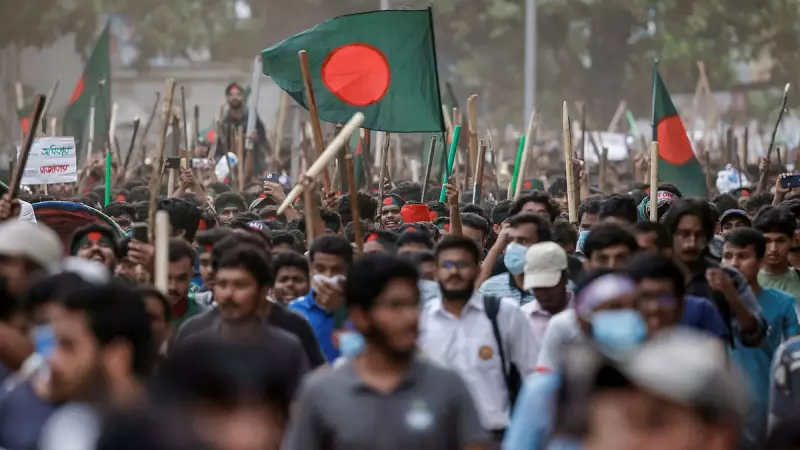
Following the killing, members of the local Hindu community and civil society groups gathered, expressing their deep anguish and anger. They have pointed to a worrying pattern of attacks against minority groups in Bangladesh. Community leaders have staged protests, demanding immediate action from the authorities.
The key demands from the community include:
- A swift and transparent investigation to identify and arrest the perpetrators.
- Revealing the true motive behind the targeted killing.
- Enhanced security measures for minority communities across the country.
- Assurance from the government that such violence will not be tolerated.
Police Investigation and Political Reactions
Law enforcement agencies have launched a comprehensive probe into the murder. Madaripur's Superintendent of Police, Mustain Billah, confirmed that a case has been registered in connection with the shooting. Forensic teams have collected evidence from the crime scene, and police are scanning CCTV footage from the vicinity to trace the motorcycle and the assailants.
While the primary motive remains unclear, police are exploring all possible angles. These include potential business rivalries, personal enmity, or the sinister possibility of a hate crime targeting a member of a religious minority. No group has claimed responsibility for the attack so far.
The incident has drawn sharp reactions from political leaders in Bangladesh. Leaders from minority rights forums and opposition parties have criticized the government, alleging a failure to protect its citizens. They have highlighted that such attacks undermine the nation's secular principles and create an environment of fear.
This killing is not an isolated event. It adds to a list of similar violent incidents against Hindu, Buddhist, and Christian individuals in Bangladesh over recent years. Human rights organizations have repeatedly called for stronger legal frameworks and more effective implementation of laws to safeguard minority rights.
The murder of Anupam Saha is a grim reminder of the vulnerabilities faced by minority communities. As the investigation continues, the eyes of the nation and international observers are on the Bangladeshi authorities. The world is watching to see if justice will be served swiftly and if concrete steps will be taken to prevent such tragedies in the future, ensuring safety and equality for all citizens regardless of their faith.