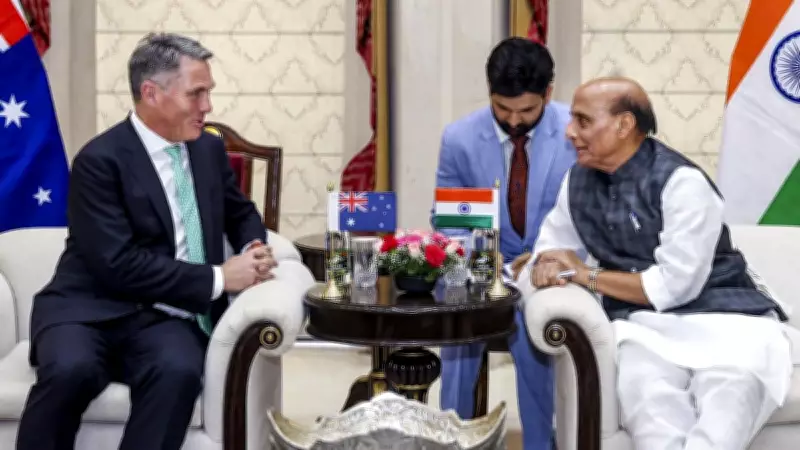
India and Australia have underscored the importance of maritime freedom and supply chain security during high-level talks held recently. Both sides affirmed the significance of enhancing cooperation with regional partners to help maintain a free, open, peaceful, stable, and prosperous Indo-Pacific region.
Key Outcomes of the Talks
The discussions, which involved senior officials from both nations, focused on strengthening bilateral ties and addressing shared security concerns. The leaders reiterated their commitment to upholding international law, particularly the United Nations Convention on the Law of the Sea (UNCLOS), which governs maritime activities.
Maritime Security and Freedom of Navigation
Both countries emphasized the need to ensure freedom of navigation and overflight in the Indo-Pacific, as well as unimpeded lawful commerce. They recognized that maritime security is essential for regional stability and economic prosperity. The talks also highlighted the importance of building the capacity of regional states to manage maritime challenges effectively.

Supply Chain Resilience
Supply chain security emerged as a critical area of cooperation. India and Australia agreed to work together to diversify supply chains and reduce dependencies on single sources, particularly in critical sectors such as technology, energy, and defense. This aligns with broader efforts to enhance economic resilience against disruptions.
Strategic Partnership
The discussions built on the Comprehensive Strategic Partnership between India and Australia, which has deepened in recent years. Both nations are members of the Quad, along with Japan and the United States, and share a common vision for a rules-based order in the Indo-Pacific.
Defense and Security Cooperation
Defense Minister Rajnath Singh led the Indian delegation, while Australian officials included representatives from the Department of Defence and Foreign Affairs. The talks covered joint military exercises, intelligence sharing, and defense technology collaboration. The two sides also explored opportunities for co-development and co-production of defense equipment.
Economic and Trade Ties
Beyond security, the talks touched upon economic cooperation, including the implementation of the India-Australia Economic Cooperation and Trade Agreement (ECTA). Both countries expressed satisfaction with the growing trade volumes and investment flows, and committed to further reducing barriers to commerce.
Regional Cooperation
India and Australia reaffirmed their support for ASEAN centrality and the ASEAN-led mechanisms in the Indo-Pacific. They also discussed ways to engage with Pacific Island countries to address their development and security needs. The leaders agreed to continue coordinating on issues related to the South China Sea, where both nations advocate for peaceful dispute resolution.
Climate and Technology
The talks also touched upon climate change and technology cooperation. Both sides pledged to work together on clean energy transitions, including green hydrogen and solar power, as well as digital public infrastructure and cybersecurity.
The high-level talks concluded with a joint statement outlining the shared vision for a free, open, and inclusive Indo-Pacific. The next round of discussions is expected to take place later this year in Australia.