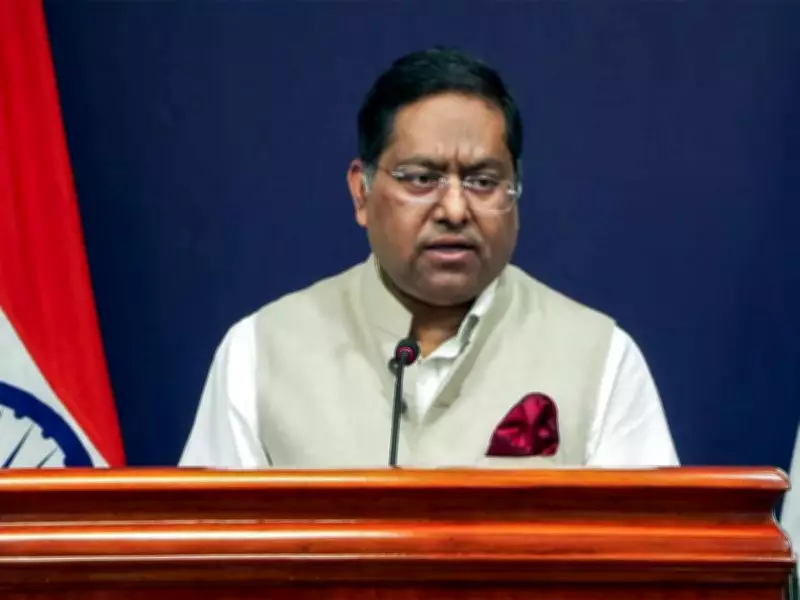
India has categorically rejected Nepal's claims over the Lipulekh region, asserting that any attempt to unilaterally enlarge territorial claims is untenable and against the spirit of bilateral agreements. The Ministry of External Affairs (MEA) issued a strong statement on Tuesday, reiterating India's consistent position that Lipulekh is an integral part of Indian territory.
India's Stance on Lipulekh
The MEA statement emphasized that the area of Lipulekh, located in the Uttarakhand region, has always been under Indian administration. The government of India expressed deep disappointment over the recent remarks made by Nepalese officials regarding the area. India maintains that the boundary between the two countries is well-defined and has been historically established through treaties and agreements.
Historical Context of the Boundary
The India-Nepal boundary was delineated in the Treaty of Sugauli (1815-1816) and further clarified through subsequent agreements. Lipulekh is a strategic pass that connects India to the Kailash-Mansarovar pilgrimage route in Tibet. India has consistently maintained that the region falls within its sovereign territory and that Nepal's claims are baseless.

Diplomatic Tensions
The rejection comes amid heightened diplomatic tensions between the two South Asian neighbors. Nepal had recently published a revised map that included Lipulekh, Kalapani, and Limpiyadhura within its borders. India strongly objected to this move, calling it a unilateral act that violates the existing bilateral understanding. The MEA reiterated that such actions are not acceptable and urged Nepal to refrain from making claims that are not supported by historical evidence.
India's Call for Dialogue
Despite the firm stance, India has expressed its willingness to resolve the matter through diplomatic channels. The MEA statement said that India remains committed to maintaining friendly relations with Nepal and resolving any outstanding issues through dialogue and mutual respect. However, it made it clear that any attempt to alter the status quo through unilateral actions would not be tolerated.
The Indian government also highlighted that the Lipulekh region is of strategic importance for India's defense and infrastructure development. The area is part of the Indian border with China, and any claims by Nepal could complicate security arrangements. India urged Nepal to consider the broader implications of its actions on bilateral ties and regional stability.
Reactions from Nepal
Nepal's government has defended its map revision, citing historical and cartographic evidence. Nepalese officials argue that the region has been historically part of Nepal and that India's claims are an encroachment on its sovereignty. However, India maintains that the evidence provided by Nepal is not credible and that the boundary has been clearly established.
The issue has also sparked domestic political debate in Nepal, with various parties taking differing positions. Some have called for a more conciliatory approach, while others demand a stronger stance against India. The Indian MEA's statement is expected to further fuel the controversy.
International Implications
The dispute over Lipulekh is not just a bilateral issue but also has implications for regional geopolitics. China, which shares borders with both India and Nepal, has been closely watching the developments. India has cautioned that any change in the status quo could be exploited by external forces to destabilize the region.
The MEA reiterated that India's position is based on international law and bilateral agreements. It called on Nepal to engage in constructive dialogue to resolve the issue amicably, without resorting to unilateral actions that undermine trust and cooperation.