Iran appears to be betting that it can outlast an embattled US President Donald Trump in high-stakes negotiations, but analysts warn the strategy rests on a volatile mix of brinkmanship, economic pain tolerance, and geopolitical miscalculation that could yet spiral back into war.
Fragile Ceasefire and Rising Tensions
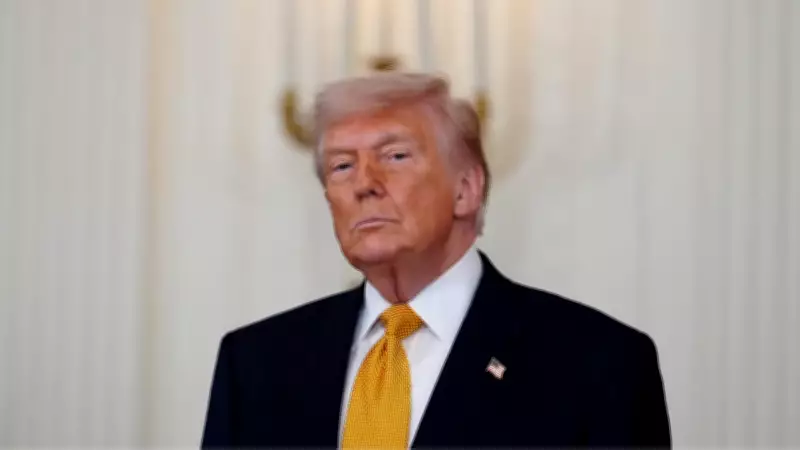
With a fragile ceasefire still holding nearly two-and-a-half months after the US-Israel war on Iran began, tensions remain high. Trump has dismissed Tehran's response to Washington's settlement proposal as inadequate and warned that the truce is "on massive life support," indicating fresh escalation if diplomacy stalls.
Yet, according to analysts cited by AFP, Iran's leadership appears convinced it can absorb pressure longer than the US can sustain confrontation. "They do think they can outlast Trump. The war is existential for them," said Sanam Vakil, director of the Middle East and North Africa Programme at Chatham House, speaking to AFP.

The calculation inside Tehran is rooted in survival logic. Even after the killing of long-time supreme leader Ali Khamenei on the first day of the conflict, the Islamic Republic's governing structure has remained intact, ideologically hardened and institutionally driven by the Revolutionary Guards. Power is now seen as more dispersed, with reports suggesting involvement of Khamenei's son Mojtaba Khamenei and parliament speaker Mohammad Bagher Ghalibaf emerging as key political operators in negotiations.
Hormuz as Leverage, and Risk
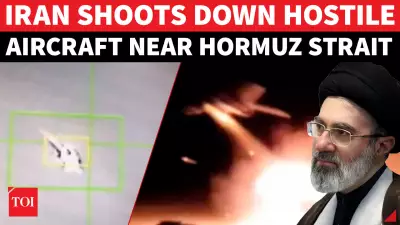
A central pillar of Iran’s strategy, analysts say, is its growing willingness to weaponise the Strait of Hormuz, the world’s most critical energy chokepoint. For the first time after years of threats, Iran has intermittently restricted maritime movement through the strait, sending shockwaves through global oil markets. Brent crude volatility has already tightened pressure on US inflation expectations, raising political costs for Trump ahead of looming midterm elections.
Thomas Juneau of the University of Ottawa told AFP the move reflects a deliberate gamble: "The Hormuz lever is essential for Iran. The leadership is calculating that Trump will lose patience with higher oil prices as domestic pressure builds." But he added that this is a double-edged strategy. "They are therefore entirely willing to absorb significant economic pain if it means waiting out Trump," Juneau said. "However, the Islamic Republic has overplayed its hand in the past, and it absolutely is at risk of doing so again," he warned.
'No Surrender' Logic in Tehran
Iranian officials insist they remain open to negotiations, but not capitulation. The distinction, analysts say, is critical. Vakil noted: "Iran is committed to negotiations but what they don’t want is surrender. They want to extract concessions because of their improved hand." That "improved hand" includes energy leverage, regional disruption capacity, and its ability to escalate pressure without immediate full-scale war.
But analysts caution that this confidence may be overstated. Arash Azizi of Yale University described Tehran’s belief in Hormuz leverage as potentially "delusional," warning it could backfire. "It might lead to a resumption of war by Trump or Israel," Azizi told AFP.
Internal Fractures and Economic Strain
Behind the negotiating posture, Iran faces mounting domestic strain. The economy remains under severe sanctions pressure, infrastructure damage from the war is still being assessed, and sporadic protests earlier this year exposed lingering public discontent. Analysts also point to uncertainty over command cohesion. While hardline institutions dominate, the absence of a single uncontested authority after the wartime leadership transition has created what some describe as a "managed but fragile consensus."
For now, the messaging remains defiant. A large billboard recently displayed in Tehran’s Valiasr Square showed Trump’s mouth bound by a Hormuz-shaped gag with the slogan: "At the breaking point." But analysts say symbolism does not necessarily translate into strategic stability.

Trump Under Pressure, but Not Without Options
On the US side, Trump faces a politically sensitive moment. Rising fuel prices, war fatigue among voters, and pressure from allies to stabilise the region are all constraining his options. Still, US officials have signalled that military escalation remains on the table if diplomacy collapses.
Iranian analyst Maziar Khosravi, speaking to AFP in Tehran, argued that deterrence dynamics have shifted: "Trump could try the military option again, hoping to eliminate another layer of leadership in the Islamic Republic," he said. "But each new generation of leaders coming to power is more intransigent than the last."
A Risky Waiting Game
The core question now is whether Iran’s strategy of endurance can outlast US political timelines — or whether it triggers renewed escalation before then. As Vakil summarised to AFP: "The military path is unlikely to push Iran into submission. The Trump administration lacks a true appreciation for the Islamic Republic’s ideological position. It sees everything from a military vantage point."
For Tehran, the wager is that time — and economic pressure on Washington — will bend the terms of negotiation. For Washington, the risk is that delay simply allows the conflict to reset at a higher level of danger. And as analysts repeatedly note, this is not the first time Iran has tested such a strategy. Whether it has "overplayed its hand before," and is doing so again, may soon determine whether this standoff ends in diplomacy or a second, more dangerous round of war.