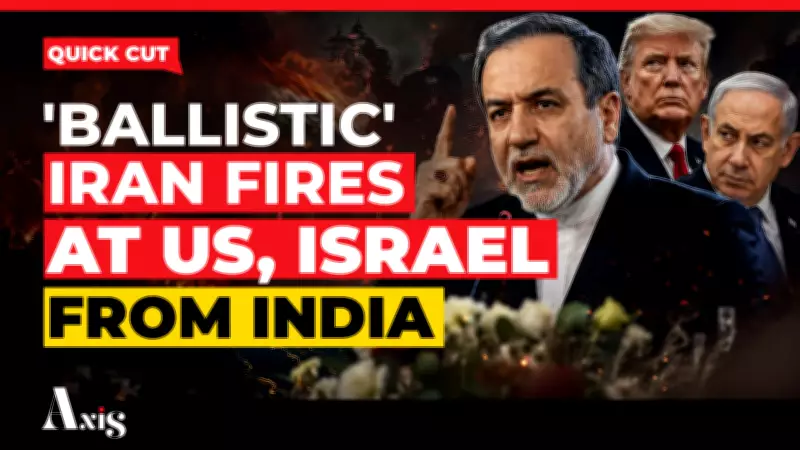
Iran has sent a loud and unmistakable message from Indian soil. At the BRICS Foreign Ministers’ Meeting in New Delhi, Iranian Foreign Minister Abbas Araghchi launched a sharp attack on the United States and Israel, accusing them of unlawful aggression and warning that Tehran will never bow to pressure. But this speech was about more than just defiance. It was about reshaping the global narrative.
Araghchi’s Fiery Address
Araghchi framed Iran’s conflict as a wider battle between the Global South and Western dominance, calling on BRICS nations to take a united stand. He invoked human suffering, challenged Western intelligence claims, and demanded concrete action against what he described as impunity. The Iranian foreign minister emphasized that Tehran remains resolute despite external threats. "We will never bow to coercion or sanctions," he declared, drawing applause from several delegates.
Challenging the West
The speech included pointed criticism of the United States’ role in West Asia and Israel’s military actions. Araghchi accused both nations of destabilizing the region and violating international law. He also questioned the credibility of Western intelligence, suggesting it was used to justify aggression. "The era of unilateralism is over," he stated, urging BRICS members to collectively resist hegemonic policies.

Implications for BRICS and India
As tensions escalate across West Asia, this fiery address puts BRICS in a difficult position and tests India’s delicate diplomatic balance. India, as the host nation, maintains ties with both Iran and Israel, making its role as a neutral convener challenging. Analysts suggest that Araghchi’s remarks could influence BRICS’ future stance on global conflicts, potentially shifting the bloc toward a more assertive anti-Western posture.
- Araghchi’s call for unity among Global South nations resonated with several BRICS members, including China and Russia.
- The address highlighted the growing divide between Western and non-Western blocs in international forums.
- India faces the delicate task of balancing its strategic partnerships while upholding its non-aligned principles.
Is this the beginning of a new geopolitical alignment, or just another chapter in an escalating global standoff? The BRICS meeting in New Delhi may prove to be a watershed moment in international relations, as nations grapple with the shifting dynamics of power and influence.