Iran: Trump Has 'No Better Option' Than Accepting Tehran's Conditions
A senior commander of the Islamic Revolutionary Guard Corps stated that Tehran will not resume negotiations without confidence-building measures from the United States, warning Washington that it has 'no better option' than accepting Iran's demands. Mohammad-Ali Jafari, the former IRGC chief commander who now leads the Guard's Cultural and Social Headquarters, said, 'A renewed war would certainly be to America's detriment. Donald Trump does not like the texts sent by the Islamic Republic's negotiating team, but he has no better option than accepting Tehran's conditions.'
Hezbollah Drone Strike Injures Civilians Amid Israel-Lebanon Talks
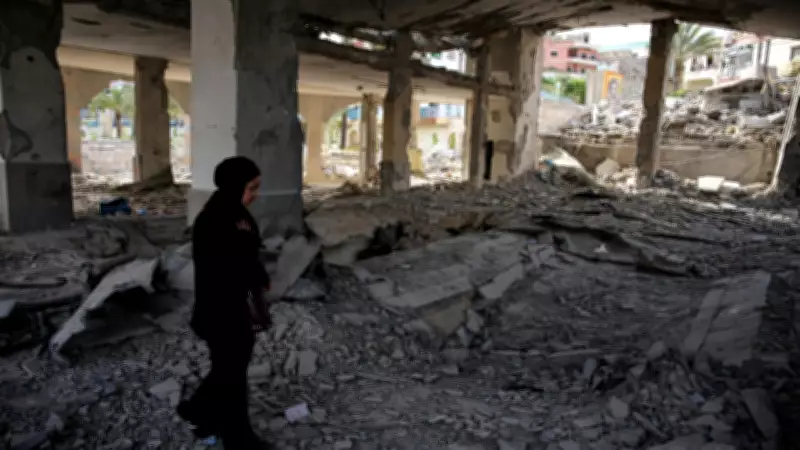
Hezbollah claimed responsibility for launching an explosive drone at Israeli troops near the border town of Rosh HaNikra in northern Israel on Thursday. The Israeli military reported that several civilians were injured after the drone fell inside Israeli territory. The Galilee Medical Center confirmed four casualties, including one person in critical condition. This attack occurred as Israeli and Lebanese officials held a fresh round of talks in Washington aimed at extending a fragile ceasefire due to expire on Sunday. Despite the truce technically remaining in place since April, both sides have continued exchanging attacks. Lebanon's state news agency reported new Israeli airstrikes in the south and east of the country, while Israel claimed it had struck more than 65 Hezbollah targets in the past 24 hours. Lebanese authorities say more than 2,800 people have been killed since the conflict escalated earlier this year.
Iran and UAE Clash at BRICS Meeting Over West Asia Conflict
Sharp divisions over the West Asia crisis erupted during the BRICS foreign ministers' meeting in New Delhi, exposing growing tensions within the expanded bloc. Iranian Foreign Minister Abbas Araghchi reportedly clashed with UAE Minister of State Khalifa Shaheen Al Marar during discussions on the regional conflict, forcing Russian Foreign Minister Sergey Lavrov to intervene and calm the situation. Iran urged BRICS nations to condemn what it described as 'illegal aggression' by the United States and Israel, accusing Western powers of violating international law. The UAE, however, criticized Tehran over alleged attacks on regional energy infrastructure and rejected accusations that it had supported military action against Iran. The heated exchanges highlighted the growing challenge of maintaining consensus within BRICS after its expansion to include Iran and the UAE. With the bloc now representing nearly half the world's population, disagreements over major geopolitical crises could complicate efforts to issue unified statements on issues such as energy security, trade disruptions, and regional diplomacy.

Jerusalem Day March Sees Racist Chants and Clashes in Old City
Thousands of Israeli nationalists marched through Jerusalem's Old City during the annual Jerusalem Day celebrations, with some participants chanting anti-Arab slogans and clashing with Palestinian residents and activists. Videos and eyewitness accounts showed marchers shouting 'Death to Arabs' and attacking Palestinian property as police maintained a heavy security presence throughout the area. The annual event marks Israel's capture and annexation of east Jerusalem during the 1967 Arab-Israeli war, a move not recognized internationally. Palestinian residents described scenes of intimidation, with several shopkeepers forced to shut their businesses while nationalist youths roamed the narrow streets. Israeli far-right minister Itamar Ben Gvir also visited the Al-Aqsa mosque compound during the celebrations, a move likely to further inflame tensions. While many marchers described the event as a patriotic display, rights groups and activists warned that the atmosphere has become increasingly hostile each year. The march took place against the backdrop of ongoing regional conflict and repeated ceasefire violations in Gaza and Lebanon.

Iraq's New Prime Minister Vows Crackdown on Armed Groups
Iraq's parliament approved a new government led by Prime Minister Ali al-Zaidi, who has pledged to bring all weapons under state control amid mounting pressure from Washington to curb Iran-backed militias. The 40-year-old leader, Iraq's youngest premier, secured parliamentary backing after months of political deadlock and negotiations among rival Shia factions. Zaidi's program focuses heavily on reforming Iraq's security apparatus and strengthening the authority of state institutions. The issue has become increasingly sensitive following attacks by Iran-backed armed groups on US facilities during the recent West Asia conflict. Washington has repeatedly urged Baghdad to disarm militias it considers terrorist organizations, while Iran-backed factions reject any moves made under foreign pressure. Zaidi now faces the difficult task of balancing Iraq's ties with both Tehran and Washington while also repairing relations with Gulf states affected by regional instability. Economic reforms are another major challenge, particularly as Iraq struggles with falling oil revenues and disruptions linked to tensions in the Strait of Hormuz.
Jaishankar Warns of Threats to Maritime Trade and Energy Security
External Affairs Minister S. Jaishankar warned that instability in West Asia was threatening maritime trade and global energy supplies, particularly through the Strait of Hormuz. He called for dialogue, respect for sovereignty, and uninterrupted shipping routes, while stressing that 'peace cannot be piecemeal.' His remarks came during the BRICS foreign ministers' meeting in New Delhi, where he emphasized the need for collective action to address the widening conflict and its impact on global security.