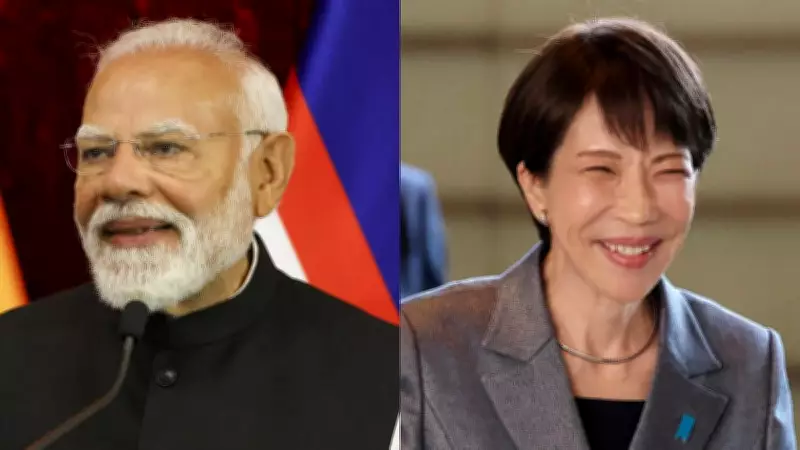
Japanese Prime Minister Sanae Takaichi is set to visit India for a bilateral summit aimed at deepening ties between the two nations. The summit will review progress across trade, technology, infrastructure, defence, and people-to-people ties, while also addressing regional and global issues, according to a Reuters report published on 30 June 2026.
Summit Agenda and Key Areas
The meeting between Takaichi and Indian Prime Minister Narendra Modi will focus on enhancing cooperation in critical sectors. Trade discussions are expected to build on existing economic partnerships, with both nations seeking to boost bilateral commerce. Technology collaboration, particularly in digital infrastructure and innovation, is also high on the agenda.
Infrastructure development, including projects under India's connectivity initiatives, will be reviewed. Defence cooperation, which has grown in recent years through joint exercises and technology transfers, is likely to see new agreements. People-to-people ties, supported by cultural exchanges and educational partnerships, will also be addressed.

Regional and Global Issues
Beyond bilateral matters, the leaders are expected to discuss regional security challenges, including maritime security in the Indo-Pacific. Global issues such as climate change, supply chain resilience, and multilateral cooperation are also on the table. Both nations have aligned interests in promoting a free and open Indo-Pacific.
According to the Reuters report, the summit aims to strengthen strategic coordination between Tokyo and New Delhi. The two countries have deepened their partnership through initiatives like the Asia Africa Growth Corridor and the Quad, which includes the US and Australia.
Economic and Defence Cooperation
Japan has been a key investor in India's infrastructure, with projects like the Mumbai-Ahmedabad High-Speed Rail. Defence ties have expanded with joint military exercises and technology-sharing agreements. The summit is expected to announce new initiatives in these areas, potentially including cybersecurity cooperation and space collaboration.
People-to-people ties have also grown, with over 1.5 million annual visitors between the two countries before the pandemic. Educational exchanges and tourism are expected to be boosted under new agreements.