

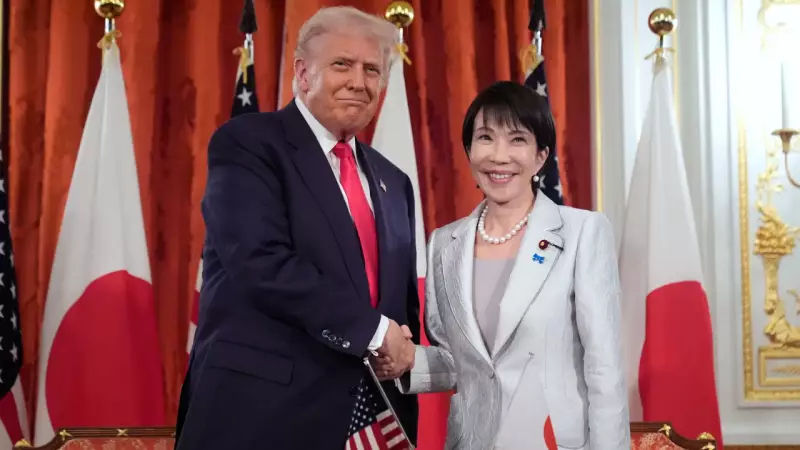
Japan's Takaichi and Trump Hold Crucial Talks Amid Rising Taiwan Tensions
In a significant diplomatic development, Sanae Takaichi, the leader of Japan's ruling Liberal Democratic Party, has disclosed details of her recent telephone conversation with former US President Donald Trump. The call, initiated by Trump last month, focused heavily on the evolving dynamics of US-China relations and their implications for regional security.
Content of the Trump-Takaichi Conversation
Takaichi confirmed that Trump personally requested the call and provided what she described as a comprehensive explanation of the current state of affairs between the United States and China. The discussion between the two political figures centered on strengthening the crucial Japan-US alliance and addressing various security challenges across the Indo-Pacific region.
Perhaps most notably, Trump assured Takaichi of their close relationship, explicitly telling her that she should consider herself "a very close friend" and feel free to contact him at any time. This personal assurance comes at a time of heightened geopolitical sensitivity in the region.

China's Strong Reaction to Takaichi's Taiwan Remarks
The revelation of this conversation follows China's aggressive response to statements Takaichi made earlier this month in the Japanese parliament. She had asserted that a Chinese attack on Taiwan could be viewed as an existential threat to Japan, potentially justifying military response from Japan's Self-Defense Forces.
China, which maintains its long-standing position that Taiwan is an inseparable part of its territory, reacted swiftly and harshly. Beijing implemented several retaliatory measures including blocking Japanese seafood imports, canceling joint cultural events, and issuing travel warnings against Japan to its citizens.
The diplomatic row intensified further when Takaichi, in a major foreign policy address, characterized any Chinese attempt to blockade or seize Taiwan as a direct threat to Japan's national security, referencing the country's mutual defense treaty with the United States.
Immediate Fallout and Broader Implications
Beijing's response was immediate and severe. Chinese Foreign Minister Wang Yi accused Takaichi of sending what he called a shocking wrong signal and crossing a red line. The Chinese embassy in Tokyo summoned Japan's ambassador for urgent discussions, while the People's Liberation Army warned that any Japanese involvement in a Taiwan conflict would result in a crushing defeat.
These tensions provided the backdrop for Monday's 45-minute call between Chinese President Xi Jinping and Donald Trump. According to China's state-run Xinhua news agency, Xi specifically raised the Taiwan issue during their conversation, emphasizing the importance of what he termed Taiwan's return to China.
Interestingly, Trump made no public mention of Taiwan in his comments following the call, instead focusing on trade discussions and the one-year truce in the US-China trade war that both leaders had previously established.
Analysts observing these developments suggest that Beijing is making a direct appeal to Washington to influence Japan's position on Taiwan. Rorry Daniels of the Asia Society Policy Institute noted that Xi's approach represents a direct appeal to Trump, reflecting China's frequent preference for having Washington manage its friction with US allies rather than dealing with them directly.
This strategy appears aimed at achieving through US pressure what Chinese rhetoric has failed to accomplish - a softening or correction of Japan's increasingly firm stance on Taiwan and regional security matters.






