

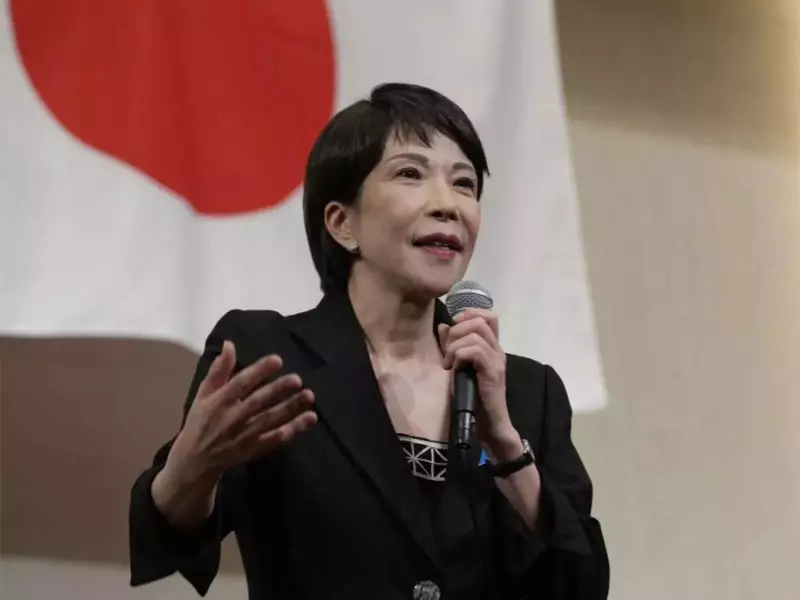
In a move highlighting the practical challenges of political representation, a group of nearly 60 women lawmakers in Japan, including Prime Minister Sanae Takaichi herself, have formally demanded more restrooms in the country's parliament building. The petition underscores a stark physical symbol of the nation's persistent gender gap, even as the number of elected women has risen.
A Queue for Equality: The Restroom Reality
The cross-party appeal, signed by 58 women parliamentarians, was submitted earlier this month to Yasukazu Hamada, who chairs the lower house committee on rules and administration. The core issue is a severe shortage of facilities for women near the main plenary session hall. According to the petition, there is only one women's lavatory with just two cubicles serving the 73 women elected to the lower house.
"Before plenary sessions start, truly so many women lawmakers have to form long queues in front of the restroom," said opposition lawmaker Yasuko Komiyama of the Constitutional Democratic Party. This daily inconvenience is a direct result of a building designed for a different era. The Diet building was completed in 1936, almost a decade before Japanese women even gained the right to vote in December 1945 following World War II.

The Numbers Behind the Disparity
The scale of the inequality is captured in stark numbers reported by the Yomiuri Shimbun newspaper. The entire lower house building contains 12 men's toilets with 67 stalls, compared to only nine women's facilities with a total of 22 cubicles. This infrastructure deficit persists despite recent electoral gains for women.
In the 2024 election, 73 women were elected to the 465-seat lower house (one has since left), a significant increase from 45 in the previous parliament. The upper house has 74 women among its 248 members. While the government has a stated target for women to occupy at least 30% of legislative seats, Japan's overall standing remains poor. The country ranked a low 118 out of 148 nations in the World Economic Forum's 2024 Global Gender Gap Report.
Progress and Paradox in Japanese Politics
Yasuko Komiyama framed the toilet shortage as a paradoxical sign. "In a way, this symbolises how the number of female lawmakers has increased," she noted, while also pointing out it reflects Japan's broader failure to achieve gender equality. The challenges for women in Japanese public life extend far beyond parliamentary facilities.
Women candidates frequently report facing sexist jibes during elections, including being told they should stay home to look after children. Underrepresentation is rampant in business and media as well. Prime Minister Takaichi's own cabinet appointments highlight the gap. Despite expressing a desire for "Nordic" levels of gender balance before taking office, she appointed only two other women to her 19-member cabinet.
Takaichi, 64, an admirer of former British leader Margaret Thatcher, has spoken candidly about women's health and her menopause experience. However, she holds socially conservative views, opposing changes to a 19th-century law requiring married couples to share a surname and supporting male-only succession in the imperial family. The petition for more toilets, therefore, sits within a complex landscape of slow progress and deep-seated tradition, a small but telling demand for practical equality in the halls of power.






