

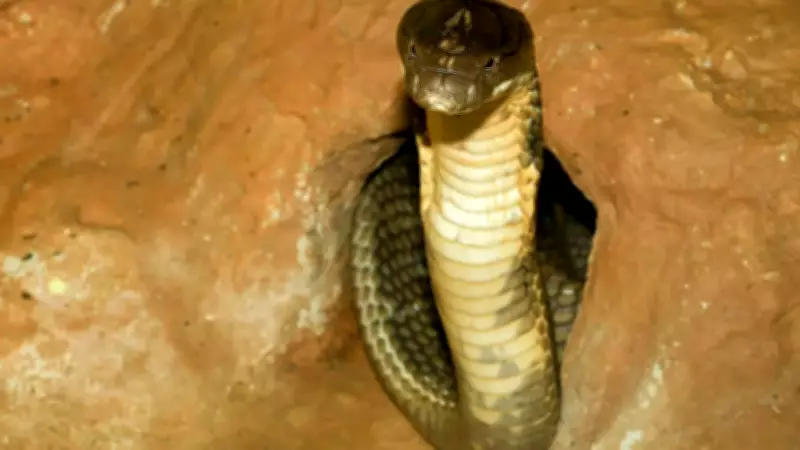
King Cobra's Unique Nest-Building Behavior: A Marvel in South India's Forests
In a fascinating twist to long-held beliefs about snakes living mostly underground, the king cobra stands out as the only snake species that builds its own nest, akin to birds. This remarkable behavior, observed annually in the forests of South India every April, challenges conventional wisdom and captivates experts and enthusiasts alike.
The Nest Construction Process
The female king cobra, renowned as one of the world's longest and most venomous snakes, undertakes this almost unheard-of task among reptiles. Unlike a simple pile of leaves, her nest is a meticulously constructed structure, reaching nearly one metre in height, designed to protect her eggs for extended periods. According to herpetologist Romulus Whitaker, as reported by BBC Wildlife, females may spend several days scouting for ideal locations before commencing construction.
These nests are not randomly placed; instead, king cobras select well-drained spots, often under large trees or within bamboo clumps, preferring a balance of shade and protection from environmental elements. Nests can measure up to 1.4 metres wide and 55 centimetres high, comparable to a small dining table. Each leaf is carefully gathered, moved, and positioned using the snake's body in a tight coil, showcasing an impressive level of precision.

Guardianship and Egg Protection
Once the leaf pile reaches sufficient size, the female king cobra presses it down by crawling over the leaves repeatedly, creating a tight, waterproof mound. She then digs into the heap to form a cup-shaped hollow, where she lays her eggs, numbering from 15 to 50. Remarkably, female king cobras typically remain on or near their nests for the full 75 to 100 days required for the eggs to hatch.
Their vigilant presence serves as a deterrent to predators, including small mammals, monitor lizards, and other snakes. While the snake does not directly warm the eggs, her watchfulness significantly enhances their safety. Well-constructed nests have a higher likelihood of protecting the eggs, with observers noting that such structures can withstand light rains and remain intact for weeks if undisturbed.
Scientific Insights and Future Research
The nest-building behavior of king cobras, involving the careful arrangement of hundreds of leaves, is a tiring yet successful endeavor that ensures the survival of the next generation. Scientists continue to study this unique trait to understand its evolutionary development and ecological significance. This behavior not only highlights the king cobra's intelligence but also underscores the complexity of reptile parenting in the wild.






