

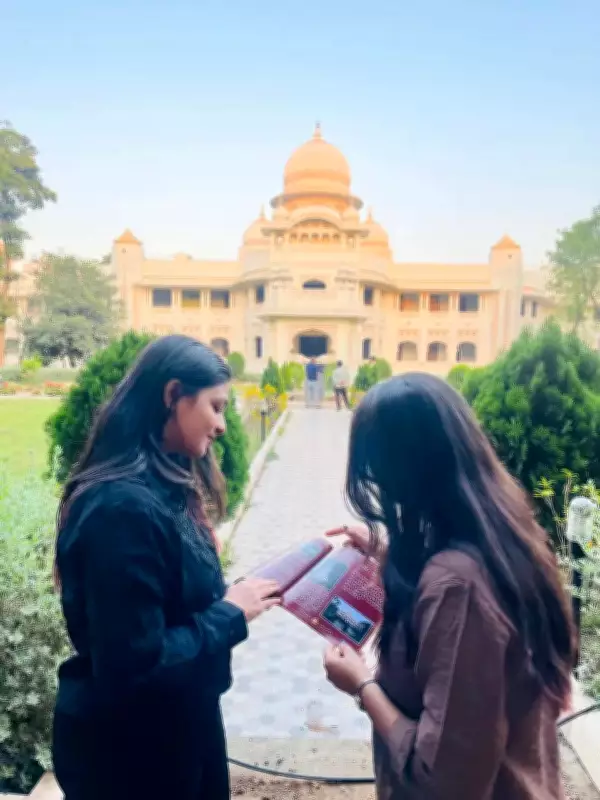
Gujarat's tourism sector is quietly evolving through two innovative initiatives led by researchers from Maharaja Sayajirao University (MSU) in Vadodara. Heritage walks in Rajpipla bring the royal legacy of the Gohil Rajput dynasty to life, while homestay owners in Vadodara receive structured training to professionalize hospitality services.
Heritage Walks in Rajpipla
Tourists in Rajpipla now explore curated heritage circuits that go beyond static monument visits. The walks cover Rajvant Palace, Pramod Villa Palace, and Vadia Palace, combining storytelling with bilingual booklets in Gujarati and English. These self-guided materials include route maps, visual references, and concise narratives, making the experience engaging for all ages.
Researcher Meera S Patel developed the initiative under the guidance of Urvashi Mishra, based on field visits, archival research, and consultations. In January, about 180 tourists participated and reported high satisfaction with the atmosphere, clarity, visual presentation, and navigation ease.

Researchers emphasize that low-cost interpretation tools can help lesser-known heritage sites attract meaningful engagement while preserving cultural assets.
Homestay Training in Vadodara
Parallelly, MSU launched a training program for homestay operators to bridge gaps in hospitality awareness. Research scholar Stuti Dave, guided by Urvashi Mishra, assessed 35 owners in Vadodara, most aged 23-35 and graduates, who managed homestays alongside other professions with an average experience of three years.
Before training, awareness levels ranged from low to moderate in areas like payment handling, guest verification, housekeeping, and front office operations. A 30-hour capacity-building program covered hospitality operations, guest interaction, grooming, hygiene, food and beverage services, and reservation systems.
Post-training, participants showed significant improvement in communication, hygiene practices, menu planning, and guest management. The program also emphasized involving visitors in local culinary experiences and showcasing regional culture.
Replicable Models for Tourism
Experts believe these initiatives can serve as replicable models for tourism development. In Rajpipla, better public amenities and infrastructure maintenance are needed, while continuous training and upskilling are essential for homestay competitiveness.
As Gujarat emerges as a fast-growing tourism destination, these university-led efforts demonstrate how academic research can strengthen local tourism ecosystems, creating sustainable livelihoods and enhanced visitor experiences.






