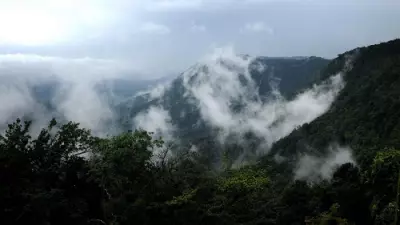
Amidst the ever-evolving biodiversity, a fascinating discovery has changed the way we perceive spiders, crickets, or flies. Recently, scientists discovered new species during an expedition to eastern Africa's Angola, specifically the remote Lisima plateau, which has revealed dozens of plants and animals unknown to science. Some of these creepy crawlers change colors, glow, camouflage, and even suck blood. Experts acknowledge this region as one of Africa's last great biodiversity blank spots, as it is a vast highland that feeds major river systems like the Congo and Okavango. The area remained isolated for decades due to rugged terrain and a 27-year civil war that ended in 2002.
Searching into the Blank Spot
The latest survey, called the Cassai Life Atlas, took place in February and was organized by The Wilderness Project. It built on earlier work that even captured a legendary, genetically distinct ghost elephant on camera back in 2024. This time, a team of 16 African and international experts gathered the most detailed picture of the plateau to date. Taxonomists expect the number of new species to rise significantly as they begin the formal process of naming and describing the specimens.
Glowing Spiders and New Insects
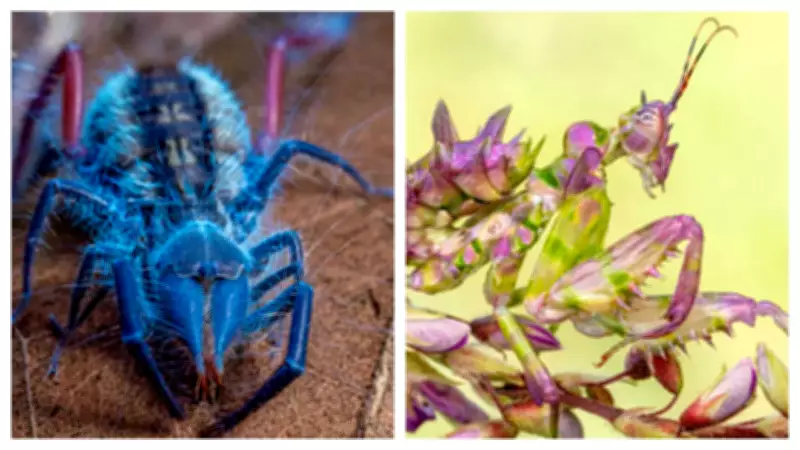
Some of the most striking finds involve remarkably adapted arachnids. The team discovered a unique crowned crab spider that glows a vibrant blue under ultraviolet light, though the exact reason remains a mystery. They also came across a ladybird orb-web spider that cleverly mimics toxic beetles to keep predators away. Out of 103 dragonfly and damselfly species recorded, eight are entirely new to science. The team also brought back eight new moth species and three previously unknown types of crickets, grasshoppers, and katydids.

Giants, Parasites, and Feathers
The expedition also documented incredible creatures already known to science. They encountered the camouflaged Gaboon viper, which boasts the world's longest snake fangs at up to 5 centimeters. They also observed the flightless bat fly, a parasite that drinks blood while swimming through bat fur, and the many-plumed moth, which flies using delicate, feather-like strands instead of solid wing membranes.
Mud, Breakdown, and Malaria
The fieldwork was a logistical nightmare because it took place during the peak of the rainy season. Expedition leader Rob Taylor noted that the team's convoy frequently got stuck in deep mud for entire days. The crew also had to deal with mechanical failures like broken alternators and worn brake pads, alongside several real-world cases of malaria. Despite this, the scientists used every breakdown as an opportunity to jump out and sample the surrounding wetlands.
The Fight for Permanent Protection
Interestingly, the race is now on to protect these creatures. Taylor warned that species with tiny geographic ranges are highly vulnerable. Dragonflies can be devastated by mining pollution, while rare butterflies risk losing their specific host plants to slash-and-burn farming. Ironically, leftover landmines from the civil war have kept developers away for decades, accidentally preserving the plateau. The Wilderness Project is leveraging these new discoveries to secure formal conservation status, building on a massive 2025 breakthrough that protected 5.4 million hectares of the region.