Partial Lunar Eclipse Aligns with Holi, Offering Rare Celestial Event
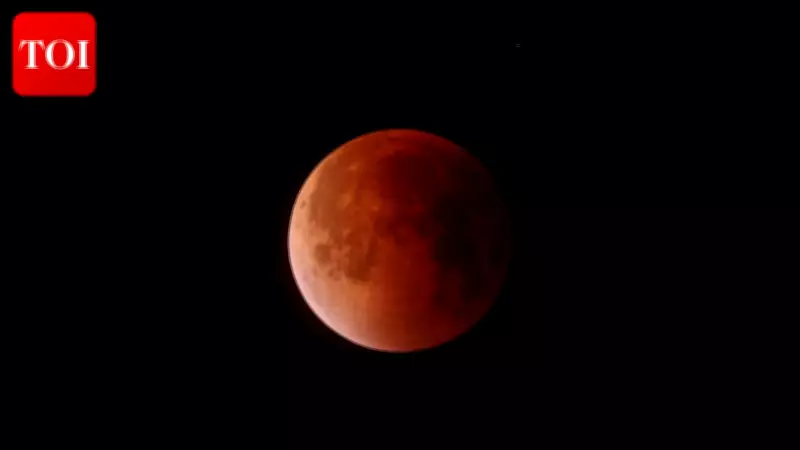
Skywatchers in Goa are set for a brief opportunity to observe a partial lunar eclipse on March 3, a phenomenon where the Earth's shadow envelops the moon, casting it in striking red copper hues. This astronomical occurrence uniquely coincides with the festival of Holi, creating a rare fusion of cultural and celestial alignments that captivates enthusiasts.
Limited Visibility in Goa Due to Timing and Twilight
According to Satish Nayak, president of the Association of Friends of Astronomy (AFA) Goa, the eclipse's visibility will be minimal in the region. This is primarily due to the event's timing, which overlaps with evening twilight, reducing the chances of a clear view. Nayak emphasized that while this is technically a total lunar eclipse, producing the dramatic 'blood moon' effect during totality, that phase will not be fully visible from Goa.
The moon is scheduled to rise over Goa at 6:42 PM, already in a partially eclipsed state. The local conclusion of the eclipse will occur at 7:42 PM, offering a narrow window for observation. Nayak noted that observers in Goa can expect to see only about 3 to 5% of the eclipse, making it a fleeting spectacle.

Best Viewing Locations and Scientific Explanation
The total phase of the lunar eclipse will be most visible from regions including the central Pacific Ocean, parts of western North America, eastern Russia, China, and Japan. In these areas, the 'blood moon' will be fully displayed, showcasing the moon's red coloration caused by sunlight filtering through Earth's atmosphere.
During a lunar eclipse, Earth positions itself between the sun and the full moon, casting a shadow that covers the lunar surface. The red appearance, often referred to as a 'blood moon,' results from scattered sunlight passing through Earth's atmospheric layers, bending and tinting the light before it reaches the moon.
Cultural and Astronomical Significance
This event marks a special alignment as it occurs on Holi, a festival celebrated with vibrant colors and joy across India. The convergence of such an astronomical phenomenon with a major cultural holiday adds an extra layer of interest for both scientists and the general public. It highlights how celestial events can intersect with human traditions, offering moments of wonder and reflection.
For those in Goa, despite the limited visibility, this partial lunar eclipse serves as a reminder of the dynamic nature of our solar system. Skywatchers are encouraged to take advantage of the brief viewing period, weather permitting, to catch a glimpse of this rare 'blood moon' event.