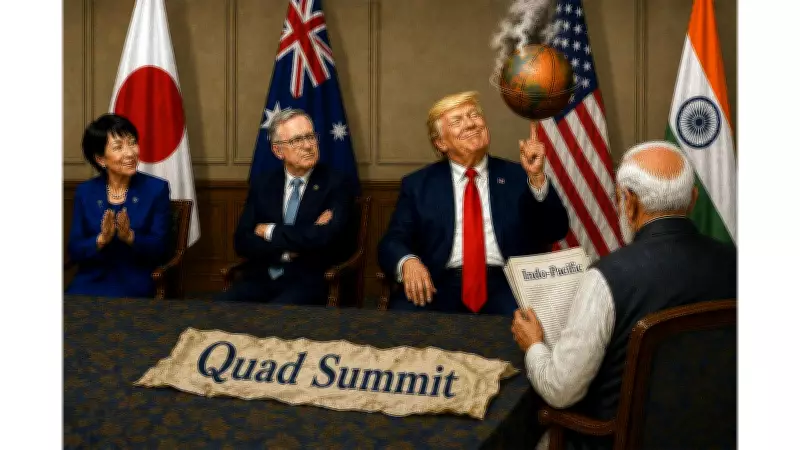
The Quadrilateral Security Dialogue, commonly known as the Quad, comprising the United States, Japan, Australia, and India, has been a cornerstone of Indo-Pacific strategy. However, recent developments have raised questions about its cohesion and effectiveness. This article examines the current state of the Quad, the challenges it faces, and its potential trajectory.
Internal Dynamics and Divergent Priorities
One of the primary challenges for the Quad is the divergent priorities among its members. While all four nations share a common interest in a free and open Indo-Pacific, their approaches vary. The United States, under the Biden administration, has emphasized strengthening alliances and countering China's influence. Japan has focused on economic security and maritime cooperation, while Australia has prioritized defense partnerships and technology sharing. India, on the other hand, has maintained strategic autonomy, balancing its relationships with the Quad and other major powers like Russia.
These differences have sometimes led to friction. For instance, India's continued import of Russian oil and its non-alignment stance have been points of contention. Similarly, Australia's decision to acquire nuclear-powered submarines through AUKUS, a separate trilateral security pact with the US and UK, has raised concerns about duplication of efforts and resource allocation within the Quad.

Geopolitical Pressures and External Challenges
The Quad operates in a complex geopolitical environment marked by China's assertiveness in the South China Sea and the East China Sea. Additionally, the war in Ukraine has diverted attention and resources away from the Indo-Pacific. The Quad's response to these challenges has been criticized as being too slow or reactive. For example, while the Quad has conducted joint military exercises and launched initiatives on vaccine production and climate change, critics argue that these efforts lack a cohesive strategic vision.
Another external challenge is the changing political landscape in member countries. Japan's leadership under Prime Minister Fumio Kishida has shown continuity, but Australia's election of a new government under Anthony Albanese has brought a shift in rhetoric, with a greater emphasis on climate change and regional diplomacy. In India, Prime Minister Narendra Modi's strong leadership has kept the Quad on track, but domestic pressures and elections could influence future commitments.
Opportunities for Revitalization
Despite these challenges, the Quad has significant potential for revitalization. The alliance has already demonstrated its value in areas like maritime domain awareness, cybersecurity, and critical technology. The Quad's working groups on climate change, health security, and infrastructure offer practical avenues for cooperation. Moreover, the Quad's focus on high-quality infrastructure and connectivity projects can counter China's Belt and Road Initiative.
To strengthen the Quad, members need to align their strategic priorities more closely. This could involve regular summit-level meetings and enhanced coordination on defense and economic policies. The Quad should also expand its engagement with other like-minded partners in the region, such as South Korea, New Zealand, and ASEAN countries, to build a broader coalition for a free and open Indo-Pacific.
Conclusion
The Quad remains a crucial forum for addressing shared challenges in the Indo-Pacific. While it faces internal and external pressures, its members have the opportunity to deepen cooperation and adapt to evolving circumstances. By focusing on concrete deliverables and maintaining political will, the Quad can continue to play a stabilizing role in the region. The question is not whether the Quad will endure, but how it will evolve to meet the demands of a rapidly changing world.