

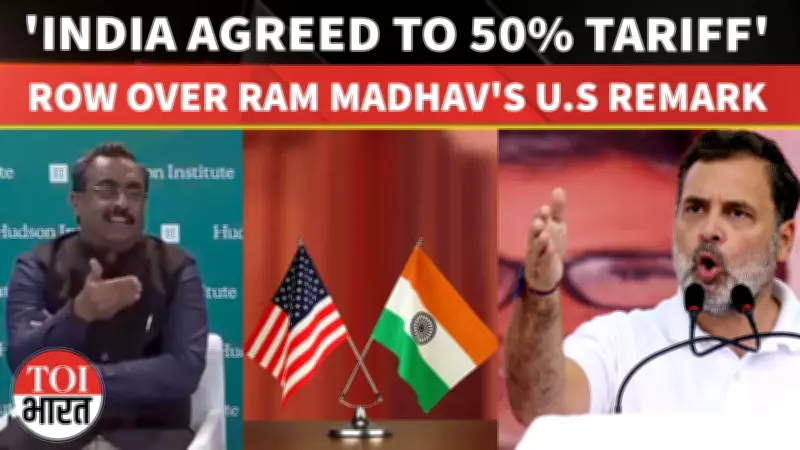
Senior BJP leader Ram Madhav triggered a political row after claiming in the US that India had agreed to stop buying oil from Russia and Iran. Speaking at an event in Washington DC, he questioned criticism of India's ties with the US. The remarks drew sharp reactions from the Indian National Congress, which accused the government of compromising sovereignty. Madhav later clarified on X that his statement was incorrect and apologised. Congress leaders, including K. C. Venugopal and Rahul Gandhi, criticised the government over foreign policy.
The controversy began when Madhav, a former point person for Jammu and Kashmir affairs, stated during a discussion in Washington DC that India had made a commitment to the United States to cease oil purchases from Russia and Iran. This statement contradicted India's official stance of maintaining energy ties with Russia despite Western sanctions over the Ukraine conflict. The Congress party quickly seized on the remarks, with Rahul Gandhi tweeting that the government was sacrificing national interests. K. C. Venugopal, Congress general secretary, demanded a clarification from the Prime Minister's Office.
Madhav later took to social media platform X to retract his claim. He wrote: "My statement at the event in Washington was incorrect. India has not agreed to stop buying oil from Russia or Iran. I apologise for the mistake." However, the damage had already been done, with opposition leaders questioning the government's foreign policy direction. The incident comes amid heightened tensions between India and the US over trade and energy issues, with the Trump administration pressuring India to reduce its reliance on Russian oil.

Rahul Gandhi, in a series of posts on X, accused the BJP of undermining India's strategic autonomy. "The BJP's double-speak on foreign policy is dangerous. One day they talk of 'Atmanirbhar Bharat', the next they bow to US pressure. India's sovereignty is not for sale," he wrote. Congress leader Shashi Tharoor also weighed in, saying Madhav's statement revealed the government's true intentions.
The BJP, however, distanced itself from Madhav's remarks. Party spokesperson Sambit Patra said that Madhav's personal views do not reflect the party's or the government's position. "India's energy policy is independent and based on national interest. We have not made any such commitment to any country," Patra stated.
This controversy has once again brought India's delicate balancing act in foreign policy into focus. India has been a major buyer of Russian oil since the Ukraine war began, taking advantage of discounted prices. This has led to friction with the US, which has imposed sanctions on Russian oil exports. The Indian government has consistently maintained that it will prioritise its energy security over external pressures.
The incident also highlights the potential pitfalls of public statements by party leaders on sensitive foreign policy matters. With general elections approaching, such remarks can be exploited by the opposition to question the government's credibility.






