

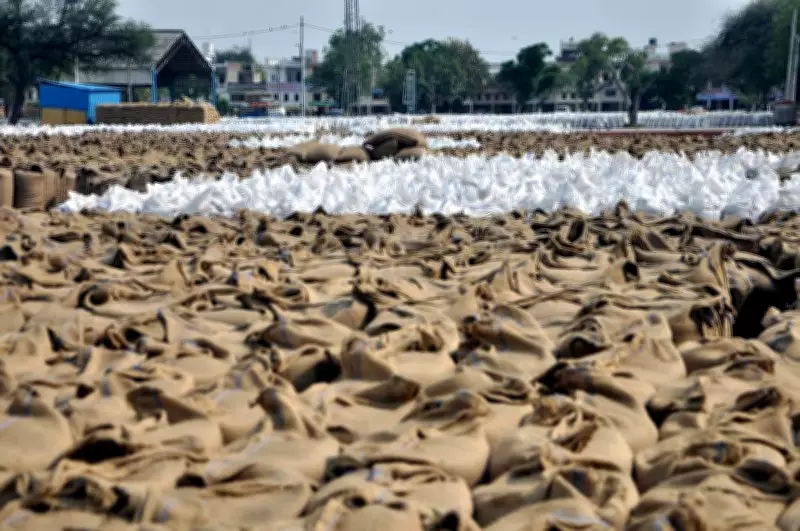
The sluggish lifting of procured wheat has led to severe congestion in grain markets across Panipat and Sonepat districts in Haryana. Farmers and traders are facing difficulties as the arrival of new wheat continues, but the removal of previously procured stocks remains slow.
Market Congestion Worsens
In Panipat, the grain market is overflowing with wheat bags, causing space constraints. Traders report that the delay in lifting by government agencies has created a backlog, forcing them to store grains in open areas. This exposes the produce to potential damage from weather and pests.
Similarly, in Sonepat, the mandis are choked with wheat stocks. The slow pace of lifting has led to long queues of tractor-trolleys waiting to unload. Farmers are worried about the quality of their produce deteriorating if not shifted to godowns soon.

Impact on Farmers
Farmers are particularly affected as they have to wait for days to sell their wheat. Many are forced to incur additional costs for transportation and storage. The delay also impacts their cash flow, as payment is linked to the lifting process.
"We have been waiting for over a week to sell our wheat. The market is so crowded that we cannot even find space to unload," said a farmer from Panipat.
Government Response
Officials from the Haryana Food and Supplies Department have acknowledged the issue. They attribute the slow lifting to a shortage of labor and transportation. Steps are being taken to expedite the process, including hiring more workers and arranging additional trucks.
"We are aware of the congestion and are working to clear the stocks. The lifting pace will increase in the coming days," a senior official stated.
Long-Term Solutions Needed
Experts suggest that the state needs to improve its storage infrastructure to handle the bumper crop. Investment in modern godowns and better logistics can prevent such bottlenecks in the future. Additionally, timely lifting should be ensured to avoid distress for farmers.
The current situation highlights the challenges in the agricultural supply chain, requiring coordinated efforts from all stakeholders.






