

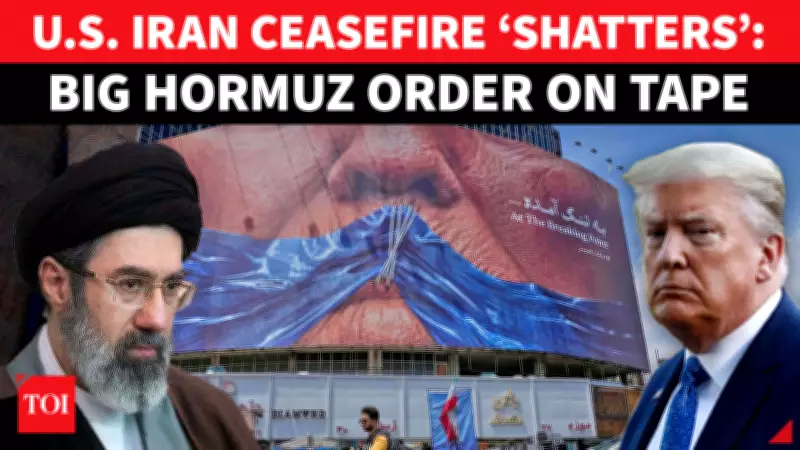
The Strait of Hormuz, a critical maritime chokepoint, lies deserted as tensions between the United States and Iran reach a fever pitch. Despite President Trump's announcement of "Operation Freedom," a plan to deploy the U.S. Navy to escort stranded commercial ships, the shipping industry remains paralyzed. Tehran has countered by declaring its own "Sovereign Zone" over the waterway, warning that any American intervention will be met with force. As 900 ships remain trapped and oil prices skyrocket, the message from Iran is blunt: "We are a superpower too."
Operation Freedom vs. Sovereign Zone
President Trump's "Operation Freedom" was intended to reassure global markets and ensure the free flow of oil through the strategic waterway. However, Iran's swift declaration of a "Sovereign Zone" has effectively nullified the initiative. The Islamic Revolutionary Guard Corps (IRGC) has positioned naval assets, including fast attack boats and missile systems, along the strait, creating a high-risk environment for any foreign military intervention.
Iran's Warning to the World
Iranian officials have issued stark warnings, emphasizing that they will not hesitate to defend their territorial claims. "No power can weaken us," an IRGC commander stated, as satellite images revealed 40 attack vessels swarming the area. The standoff has left 900 commercial vessels stranded, with crews facing shortages of food and water. The global shipping industry is bracing for prolonged disruptions.

Economic Fallout
The crisis has sent shockwaves through global energy markets. Oil prices have surged to record highs, with Brent crude exceeding $150 per barrel. Analysts warn that a sustained blockade could trigger a worldwide recession. The United States has seen domestic gas prices hit unprecedented levels, causing public discontent. President Trump's use of emergency powers to expedite arms shipments to Middle East allies has drawn criticism from Congress.
Military Posturing
Both sides have engaged in aggressive military posturing. Iran has deployed unconventional assets, including reports of "dolphin bombs" and a "mosquito fleet" of small, fast boats. Meanwhile, the U.S. Navy maintains a visible presence, with carrier strike groups positioned near the Arabian Sea. A mysterious attack on a bulk carrier has been attributed to Iranian forces, though Tehran denies involvement.
Diplomatic Stalemate
Diplomatic efforts have failed to de-escalate the situation. Iran recently issued a 14-point ultimatum to the Trump administration, demanding concessions within 30 days. The U.S. rejected the proposal outright, with Trump hinting at further strikes. Meanwhile, regional actors like Jordan have launched airstrikes in southern Syria, targeting smuggling networks, adding another layer of complexity to the conflict.
As the world watches, the question remains: who will blink first in the world's most dangerous chokepoint? With no clear resolution in sight, the Strait of Hormuz remains a symbol of geopolitical tension and economic vulnerability.






