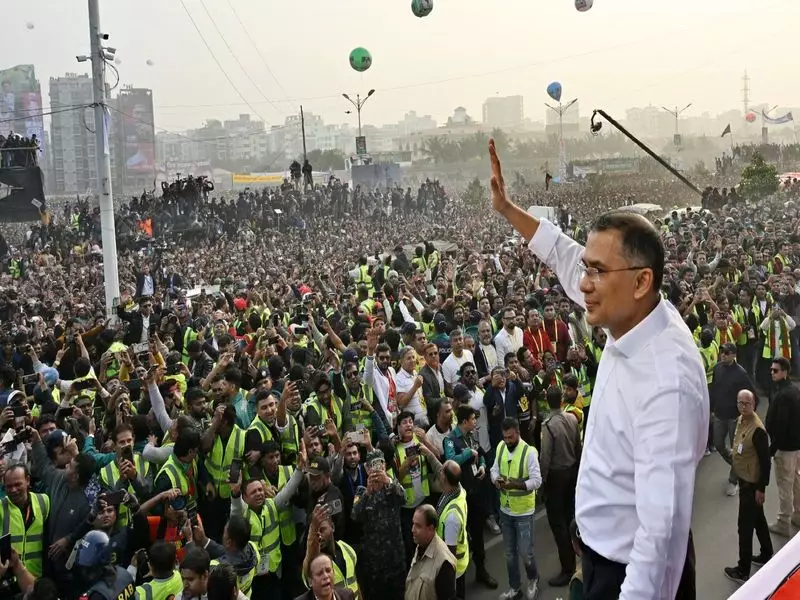
The Bangladesh Nationalist Party (BNP) has entered a new era with Tarique Rahman formally assuming the role of its Chairman. This significant leadership transition follows the recent passing of his mother, the party's longstanding leader and former Prime Minister of Bangladesh, Begum Khaleda Zia.
A Seamless Transition of Power
The party's Senior Joint Secretary General, Ruhul Kabir Rizvi, confirmed the development, stating that Rahman has officially begun discharging his duties as the head of the party. This move was widely anticipated, as Tarique Rahman had been serving as the acting chairman of the BNP since 2018, following his mother's incarceration and subsequent health complications. His appointment solidifies a leadership that has been in a de facto position for several years.
The transition underscores a dynastic shift within one of Bangladesh's two major political forces. Khaleda Zia, a towering figure in the nation's politics, led the BNP for nearly four decades after the assassination of her husband, military ruler and President Ziaur Rahman, who founded the party in 1978.

Challenges and Political Context
Tarique Rahman steps into the formal leadership role during a period of intense political strain for the BNP. The party boycotted the last general election held in January 2024, which was won decisively by Prime Minister Sheikh Hasina's Awami League. Furthermore, Rahman himself has been living in exile in London for over 15 years, having left Bangladesh in 2008.
His leadership is marked by a controversial legal history. In 2018, a Bangladeshi court convicted him in absentia for his involvement in a grenade attack on an Awami League rally in 2004. This attack aimed at the then-opposition leader Sheikh Hasina resulted in numerous casualties. Rahman has consistently denied these charges, labeling them as politically motivated.
The Road Ahead for the BNP
Assuming the chairmanship presents a complex set of challenges for Tarique Rahman. His primary tasks will involve unifying the party's ranks and navigating its strategy as the principal opposition force in a politically charged environment. The BNP's future course, its participation in the democratic process, and its ability to mobilize support under the leadership of an exiled chairman remain critical questions for observers of Bangladeshi politics.
This formal ascension marks the end of the Khaleda Zia era and the full beginning of the Tarique Rahman chapter for the BNP. How he steers the party from abroad, and how the party apparatus responds, will significantly influence Bangladesh's political landscape in the coming years. The international community and domestic stakeholders will be watching closely to see if this transition brings a new direction or continues existing political confrontations.