

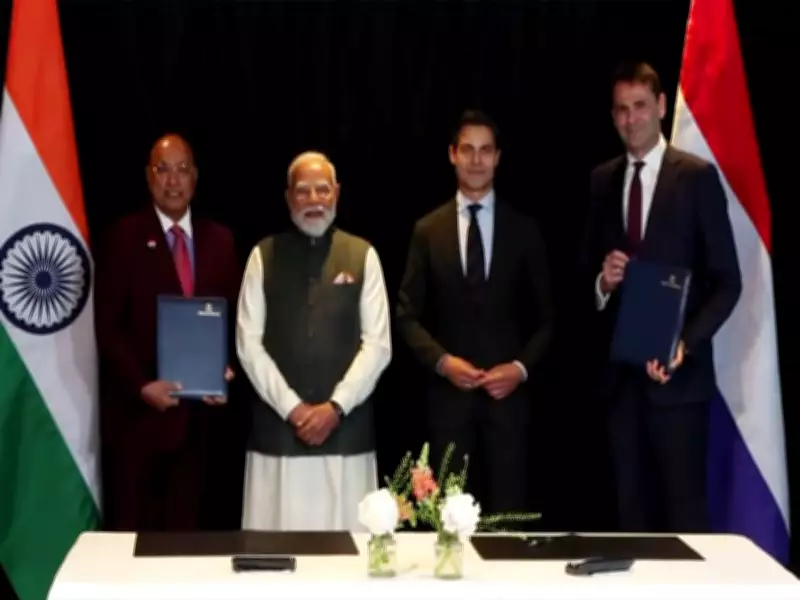
Tata Electronics, a subsidiary of the Tata Group, has signed a strategic agreement with Netherlands-based ASML, a global leader in semiconductor lithography equipment, to support the establishment of a semiconductor fabrication plant in Gujarat. Prime Minister Narendra Modi lauded the decision, calling it a significant step towards strengthening India's position in the global semiconductor supply chain.
Details of the Agreement
The partnership aims to provide advanced lithography equipment and technical support for the proposed semiconductor fab in Dholera, Gujarat. This facility will focus on manufacturing chips for various applications, including automotive, consumer electronics, and industrial sectors. The agreement also includes provisions for training and workforce development to ensure skilled talent for the plant.
Strategic Importance
The collaboration is seen as a major boost to India's semiconductor ecosystem, which has been a priority for the government under the 'Make in India' and 'Digital India' initiatives. ASML's cutting-edge technology is crucial for producing smaller, more efficient chips, and its involvement signals confidence in India's potential as a semiconductor manufacturing hub.

PM Modi's Response
Prime Minister Modi expressed his appreciation for the agreement, stating that it aligns with India's vision of becoming self-reliant in semiconductor production. He emphasized that such partnerships will create thousands of jobs and attract further investments in the sector. The Gujarat government has also extended support through incentives and infrastructure development.
Impact on India's Semiconductor Ambitions
The Tata-ASML deal is part of a broader push by India to reduce dependence on foreign chip imports. With global demand for semiconductors soaring, India aims to establish itself as a key player in the supply chain. The Dholera fab is expected to begin production within the next few years, contributing to the country's goal of becoming a $1 trillion digital economy.
Industry Reactions
Industry experts have welcomed the move, noting that ASML's involvement adds credibility to India's semiconductor roadmap. The partnership is also expected to spur innovation and research in chip design and manufacturing, benefiting startups and established firms alike.
Future Prospects
Looking ahead, the Tata Group plans to scale up its semiconductor investments, with potential expansions in other states. The success of the Gujarat fab could pave the way for more such collaborations, positioning India as a global semiconductor manufacturing destination. The government's Production Linked Incentive (PLI) scheme for semiconductors is also likely to attract more players.
In conclusion, the Tata Electronics-ASML agreement marks a milestone in India's semiconductor journey, with far-reaching implications for the economy, technology, and job creation.






