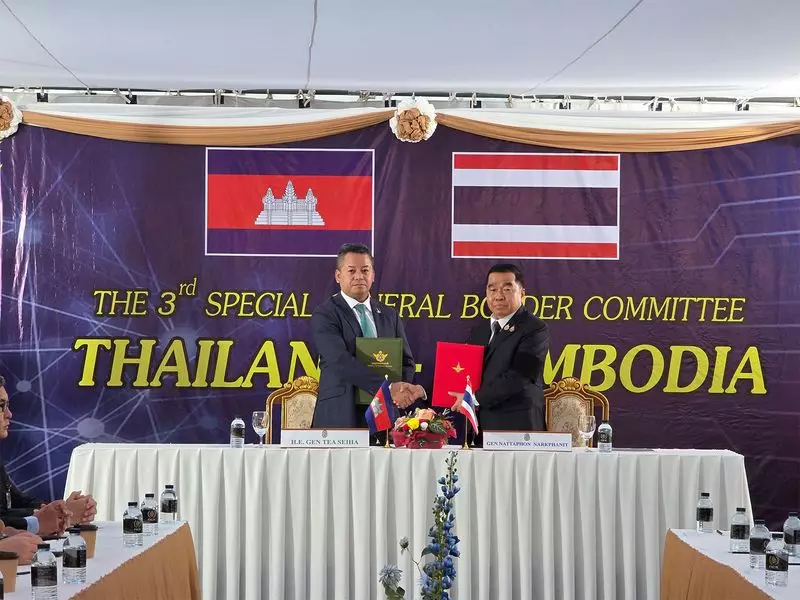
Thailand's Prime Minister, Srettha Thavisin, has initiated a significant diplomatic move by calling for a comprehensive review of all existing Memorandums of Understanding (MOUs) concerning the border with Cambodia. This development comes amidst heightened political tensions within Thailand, as opposition parties leverage the sensitive border issue in their election campaign rhetoric.
A Diplomatic Review Amidst Political Pressure
The directive from the Thai Prime Minister targets the entire framework of agreements that govern the contentious border shared with Cambodia. This push for an overhaul is a direct response to the political climate, where rival political factions have been criticising the government's handling of the long-standing border disputes. By calling for a review, the administration aims to address these criticisms proactively and assert control over the narrative.
Central to the controversy is the area surrounding the ancient Preah Vihear temple (known as Phra Viharn in Thailand). This UNESCO World Heritage site has been a focal point of sporadic conflict and diplomatic strain between the two Southeast Asian nations for decades. The temple and its adjacent land have seen military clashes in the past, making any related agreement a matter of national sensitivity.

The Core of the Dispute and Political Weaponisation
The opposition's campaign strategy has involved accusing the government of inadequately protecting Thai sovereignty and interests in the border negotiations. These allegations have evidently pressured Prime Minister Srettha's administration to demonstrate firmness and a proactive stance. The call to re-examine the MOUs is, therefore, not merely a bureaucratic exercise but a politically charged manoeuvre.
The existing MOUs were established to create a framework for joint development and demarcation in the disputed zones. However, progress has been slow and fraught with difficulties. The review signifies a potential recalibration of Thailand's approach, possibly seeking more favourable terms or a clearer path to resolution that can be defended domestically.
Regional Implications and the Path Forward
This development carries important implications for regional stability in Southeast Asia. A unilateral review of bilateral agreements by Thailand could introduce new uncertainties in its relationship with Cambodia. The Cambodian government is likely to watch these developments closely, potentially viewing the review as a step back from previous commitments.
The situation underscores how domestic political campaigns can directly influence foreign policy and international relations. The Thai government's attempt to neutralise a potent campaign issue by launching a formal review highlights the intersection of internal politics and external diplomacy. The outcome of this review will be closely monitored, not only by both nations' citizens but also by regional observers concerned with maintaining peaceful borders.
Ultimately, Prime Minister Srettha Thavisin's move is a balancing act. It seeks to placate domestic critics and shore up political support by appearing decisive on a national sovereignty issue, while simultaneously navigating the complex diplomatic waters with a neighbouring country. The success of this strategy will depend on the review's findings and whether it leads to a renewed, more stable agreement or further protracted negotiations.