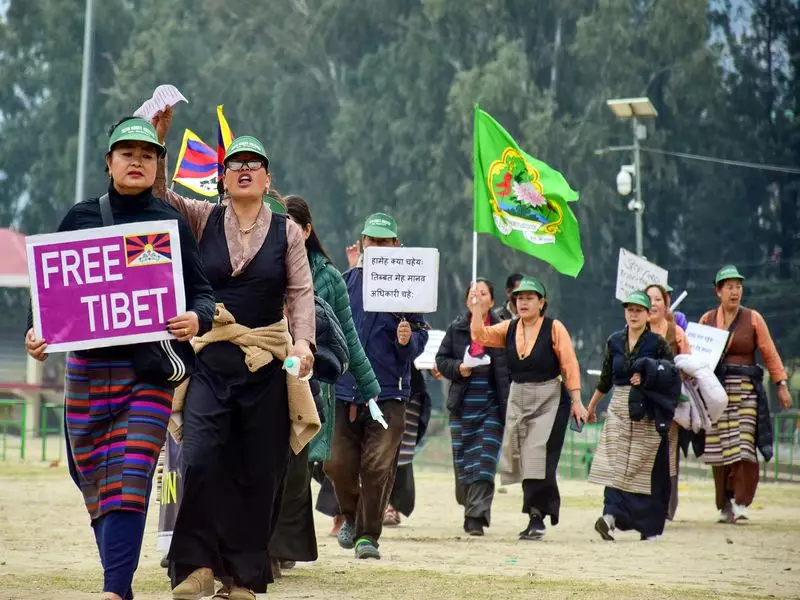
A court in China has delivered a verdict in the case of Tibetan activist Tsering Tso, sentencing her to one year in prison. However, in a significant development, the court has suspended the prison term for a period of three years.
The Court's Verdict and Charges
The judgment was passed by the Intermediate People's Court in Xining, located in Qinghai province. Tsering Tso was found guilty on charges related to "inciting secession." This legal action stems from her alleged involvement in activities that the Chinese authorities deem as threatening to national unity.
According to the court's ruling, the one-year prison sentence will not be immediately served. Instead, it has been suspended for a three-year probationary period. This means Tsering Tso will avoid incarceration unless she is found to violate the conditions set by the court during this suspension window.

Background of the Activist and Case Details
Tsering Tso is a well-known figure among Tibetan rights advocates. Her case has drawn attention from international human rights observers who monitor the situation in Tibet. The specific details of the charges relate to her online activities and communications, which the prosecution argued were aimed at undermining state sovereignty.
The legal proceedings against her are part of a broader pattern where Chinese authorities rigorously enforce laws against what they classify as separatist rhetoric, especially in regions like Tibet and Xinjiang. The Chinese government maintains that such measures are essential for preserving territorial integrity and social stability.
International Reaction and Implications
The sentencing, even though suspended, is likely to attract further scrutiny from global human rights organizations. Groups advocating for Tibetan rights often criticize China's judicial approach in the region, viewing cases like Tsering Tso's as attempts to suppress peaceful dissent and cultural expression.
For the activist, the suspended sentence offers a reprieve from immediate imprisonment but places her under a strict legal microscope for the next three years. Any perceived infraction could lead to the activation of the prison term. This outcome highlights the precarious situation faced by activists within China's legal framework, where they navigate between conditional freedom and the threat of detention.
The case underscores the ongoing tensions surrounding issues of autonomy and freedom of expression in Tibet. It also reaffirms China's firm stance on dealing with activism it considers a challenge to its national policies in the region.