US President Donald Trump has renamed the US Indo-Pacific Command (USINDOPACOM) back to the Pacific Command (USPACOM). The name change returns the command to its original designation, which Trump himself had altered to include 'Indo' during his first presidency.
Historical Context of the Pacific Command
Established in 1947, USPACOM is the oldest and largest of the eleven unified combatant commands in the US military. It is also the largest of the six geographical commands, with India falling under its area of responsibility. This command has shaped America's post-World War-II security architecture and coordinated forces during the Korean and Vietnam wars. Its vast area of responsibility, stretching from America’s West Coast to India’s western border, remains unchanged despite the rename.
Structure of the Command
Several major service commands constitute USPACOM across the vast Pacific theater. The US Army Pacific (USARPAC) is headquartered at Fort Shafter, Hawaii, while the US Pacific Fleet (PACFLT) is based at Pearl Harbor, Hawaii. The third and seventh fleets of the US Navy report to the Pacific Fleet. The US Pacific Air Forces (PACAF) are headquartered at Joint Base Pearl Harbor-Hickam, Hawaii, and the US Marine Forces Pacific (MARFORPAC) at Camp HM Smith, Hawaii. In addition, US Forces Japan (USFJ) at Yokota Air Base and US Forces Korea (USFK) at Camp Humphreys fall under its command, alongside Special Operations Command Pacific (SOCPAC), also headquartered at Camp HM Smith. Together, these formations provide integrated land, sea, air and special operations capabilities across the vast Indo-Pacific region.

Impact on India-US Relations
Over the last few years, India and the United States have built a partnership grounded in steady institutional cooperation, shared concerns about the rise of China, and a growing alignment of strategic interests. This reflected a bipartisan consensus in Washington that India’s rise strengthens the wider Indo-Pacific order. New Delhi has been expanding economic cooperation, defence links and investing in regular high-level coordination.
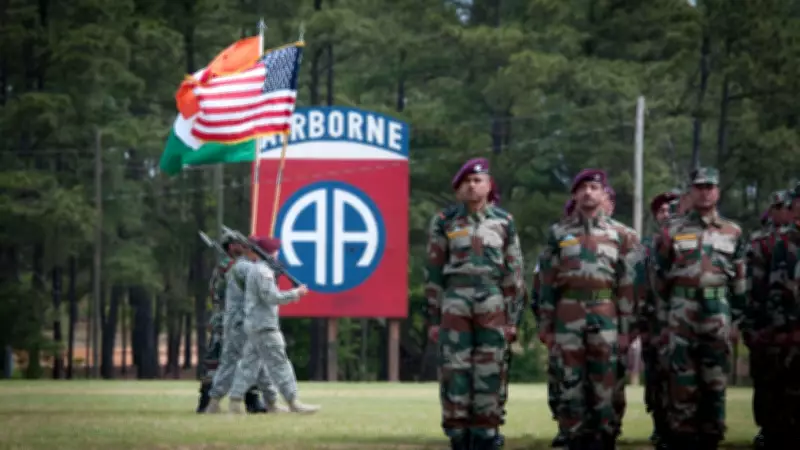
Cooperation between the Indian Armed Forces and the US Pacific Command has grown steadily, reflecting shared interests in maintaining stability and freedom of navigation across the region. The partnership spans joint exercises, maritime domain awareness, logistics exchanges and strengthening interoperability between the two militaries. India’s participation in exercises such as RIMPAC highlights the depth of naval cooperation, while air and land components have also expanded through exercises such as Yudh Abhyas and Red Flag. Since November last year, chiefs of all three service branches have visited the US, with Admiral Tripathi and General Dwivedi visiting the Pacific Command headquarters in Hawaii. These high-level engagements signal India’s intent to align more closely with US regional security frameworks, while preserving its strategic autonomy. Together, both sides are building a resilient partnership to counter emerging challenges in the Indo-Pacific.
Symbolic Significance
The dropping of 'Indo' from the command's name is seen by some as a symbolic shift in US strategic focus. However, analysts argue that the change does not diminish India's importance in the region. The command's area of responsibility remains unchanged, and India continues to be a key partner in maintaining stability and security across the Indo-Pacific. The name change may reflect a desire to return to traditional terminology, but the strategic realities and partnerships remain robust.