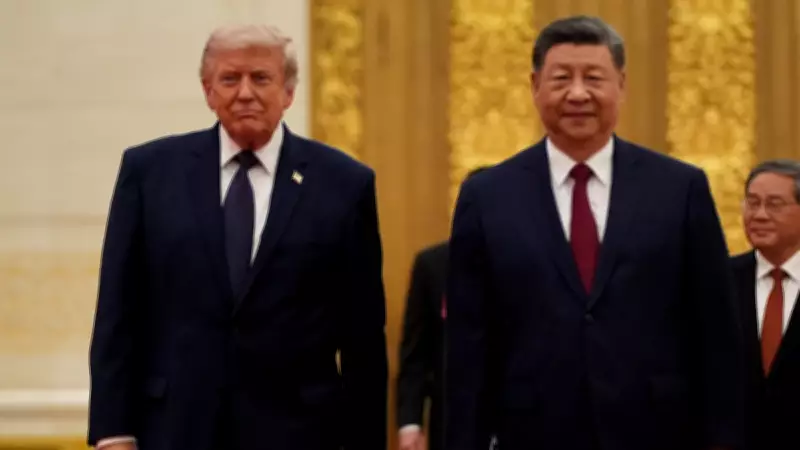
During the recent summit between former US President Donald Trump and Chinese President Xi Jinping, several critical issues were addressed, with a primary focus on global security and trade. One of the key takeaways was the reaffirmation that the Strait of Hormuz should remain open for international maritime traffic. This strategic waterway is vital for global oil shipments, and any disruption could have severe economic repercussions worldwide. Both leaders emphasized the importance of maintaining freedom of navigation in the region.
Iran's Nuclear Ambitions
Another significant point of discussion was Iran's nuclear program. Trump and Xi jointly declared that Iran can never be allowed to develop or possess a nuclear weapon. This stance aligns with longstanding international concerns over Iran's nuclear activities. The leaders called for continued diplomatic efforts and strict enforcement of existing non-proliferation agreements to ensure Iran complies with its obligations.
Trade and Economic Cooperation
Beyond security matters, the summit also touched upon trade relations between the United States and China. Both sides expressed a desire to reduce trade tensions and promote fair and reciprocal economic cooperation. They agreed to work towards resolving ongoing disputes and creating a more stable environment for businesses. This includes addressing issues related to tariffs, intellectual property rights, and market access.

Regional Stability
The leaders also discussed broader regional stability, particularly in the Middle East and Asia-Pacific. They underscored the need for peaceful resolution of conflicts and respect for international law. The summit highlighted the importance of great power collaboration in tackling global challenges, from terrorism to climate change.
Overall, the Trump-Xi summit produced a unified message on critical issues, with a commitment to keeping Hormuz open and preventing Iran from acquiring nuclear weapons. The outcomes are expected to influence future diplomatic engagements and global policy directions.