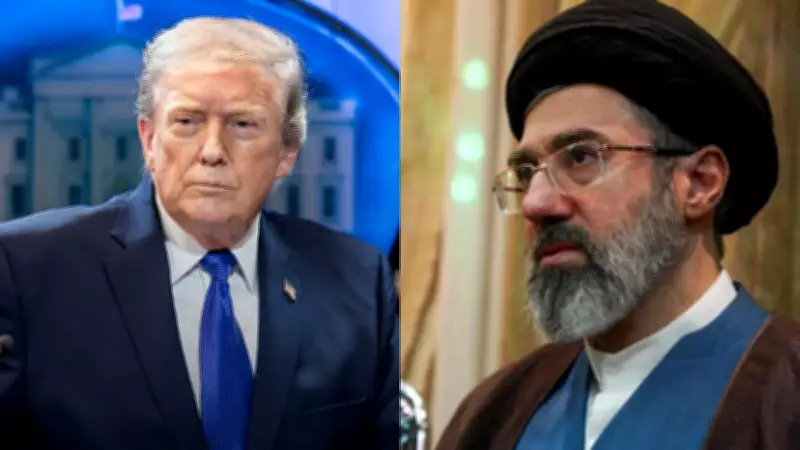
Donald Trump's perfidy and Israel's veto have delayed an Iran peace deal. Trump put the Abraham Accords on the negotiating table but conveniently forgot to add two other related critical templates of regional security: a nuclear-free West Asia, and Israel's genocide and apartheid against the Palestinians.
The Abraham Accords and Missing Pieces
The Abraham Accords, brokered by the Trump administration, normalized relations between Israel and several Arab states. However, they deliberately excluded key issues that are fundamental to long-term stability in the region. A nuclear-free West Asia remains a distant dream, as Israel's undeclared nuclear arsenal continues to be a major point of contention. Furthermore, the accords sidestepped the ongoing Israeli occupation and human rights abuses against Palestinians, which many view as apartheid.
Impact on Iran Negotiations
This selective approach has complicated efforts to revive the Iran nuclear deal, officially known as the Joint Comprehensive Plan of Action (JCPOA). Iran insists that any agreement must address broader regional security concerns, including Israel's nuclear capabilities and its treatment of Palestinians. The United States and Israel, however, have resisted linking these issues, leading to a stalemate.

- Nuclear-Free Zone: Iran and other regional actors demand a verifiable ban on nuclear weapons in West Asia, which Israel opposes.
- Palestinian Rights: The Palestinian issue remains unresolved, with the international community increasingly critical of Israeli policies.
Analyst M K Bhadrakumar argues that Trump's approach was flawed from the start. By ignoring these core templates, he undermined the possibility of a comprehensive peace. Israel's veto power over U.S. policy has further hindered progress.
Regional Reactions
Arab nations, while benefiting from the Accords, are wary of being seen as complicit in ignoring Palestinian suffering. Public opinion in many Muslim-majority countries remains strongly pro-Palestinian. Meanwhile, Iran has used the situation to position itself as a defender of Palestinian rights, gaining leverage in negotiations.
The delay in an Iran peace deal has broader implications. It risks a nuclear arms race in the region, as other countries may seek their own deterrence. Additionally, ongoing conflicts in Yemen and Syria are exacerbated by the lack of a unified security framework.
Conclusion
For a lasting peace, the international community must address all aspects of West Asian security. The Abraham Accords should be expanded to include a nuclear-free zone and a just solution for Palestinians. Until then, the region will remain volatile, and the Iran deal will continue to be delayed by the same forces that Trump unleashed.