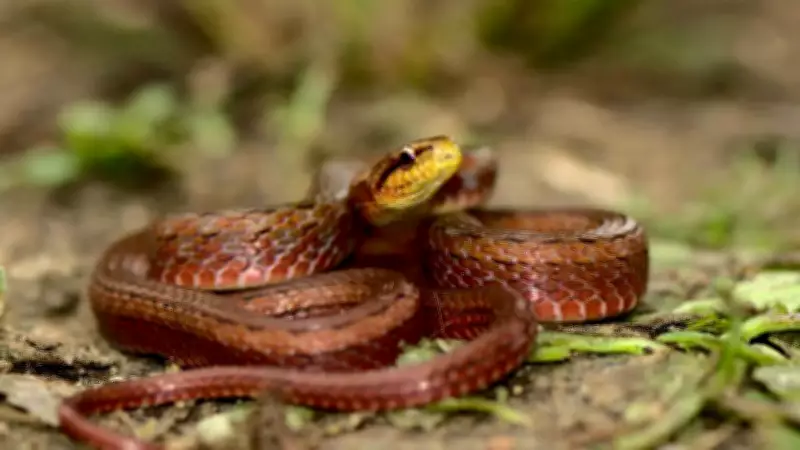
India's Biodiversity Continues to Amaze with Discovery of Two New Snake Species
The scientific community remains consistently astonished by India's remarkable biodiversity and the continual emergence of previously unknown animal species. Recent groundbreaking research has unveiled the discovery of two entirely new species of snakes within the country, creatures that were completely undocumented prior to this investigation.
Remote Northeastern Habitats Yield Hidden Treasures
The two novel snake species were located in the remote, densely forested regions of northeastern India, an area renowned for its exceptional ecological diversity and thick forest cover. This region, encompassing states like Arunachal Pradesh, is widely regarded as one of the nation's most ecologically varied zones, providing ideal conditions for species to evolve in isolation.
According to a study published in the esteemed Journal of Threatened Taxa, researchers from the Wildlife Institute of India successfully identified two natricine snake species: Hebius gilhodesi and Herpetoreas davidi. This marks the first official recording of these species in India, achieved through meticulous morphological analysis and mitochondrial DNA testing.

Scientists conducting extensive biodiversity surveys in these challenging, difficult-to-access terrains encountered these snakes. These areas, largely shielded from scientific scrutiny for decades, function as critical biodiversity hotspots, meaning these species are likely endemic and found exclusively within these specific habitats.
Unique Physical Attributes and Identification Process
What distinguishes these newly discovered snakes are their unusual bodily features, which are not commonly observed among other known species. While classification is still under detailed investigation, it is evident that the snakes possess unique physical characteristics. These attributes are typically adaptations linked to their specific lifestyle and environmental conditions. Snakes often evolve distinct body features to thrive in their particular niches, whether in grasslands, underground burrows, or arboreal settings.
The identification of new species is an exacting and thorough scientific endeavor. Researchers rely not merely on visual observations but also on comprehensive analyses of physical structures, scale patterns, and genetic variations. The process begins with field researchers meticulously documenting the species through photographs and precise measurements. Subsequently, these findings are compared against existing species databases to confirm the novelty of the discovery.
This rigorous procedure can span months or even years, requiring researchers to maintain utmost accuracy throughout to validate the discovery of a genuinely new species.
Significance of the Discovery for Science and Conservation
The discovery of new snake species holds profound importance for multiple reasons. Primarily, it enriches our scientific understanding of the natural world. Each new species offers insights into ecological dynamics and how various organisms adapt to their environments.
These discoveries are particularly valuable for evolutionary studies. The distinctive traits of these snakes provide clues about how species respond and adapt to environmental pressures over extended periods. Furthermore, such findings are crucial for conservation efforts. Effective protection of a species is impossible without its prior identification and documentation.
The revelation of these new snakes underscores the urgent need to preserve natural habitats, as it suggests numerous other species may still await discovery in India's unexplored regions.
India's Unexplored Biodiversity and Research Challenges
India is endowed with incredibly diverse ecosystems, ranging from lush forests and towering mountains to arid deserts and expansive wetlands. Despite considerable scientific exploration, vast areas, especially the Northeast and the Western Ghats, remain inadequately studied.

Experts believe that many species, including reptiles, amphibians, and insects, are yet to be discovered. The recent snake discovery vividly illustrates that the biodiversity in these regions far exceeds current perceptions. However, studying these hidden species presents significant challenges. Difficult terrain, unpredictable weather conditions, and the elusive nature of some creatures—which may be active only at specific times or possess excellent camouflage—complicate research efforts.
Nevertheless, intensified research in these areas is essential to unveil the full spectrum of India's biological diversity.
Conservation Imperatives and Future Research Directions
The discovery of new snake species also raises critical conservation concerns. These newly identified species may face threats from habitat loss, deforestation, and human encroachment. Protecting these fragile habitats is paramount, not only for the survival of known species but also for those still unknown.
Conservation initiatives and sustained scientific research are vital for safeguarding India's rich biodiversity. The ongoing exploration of remote areas promises to yield further exciting discoveries, reinforcing the country's status as a global biodiversity hotspot.