

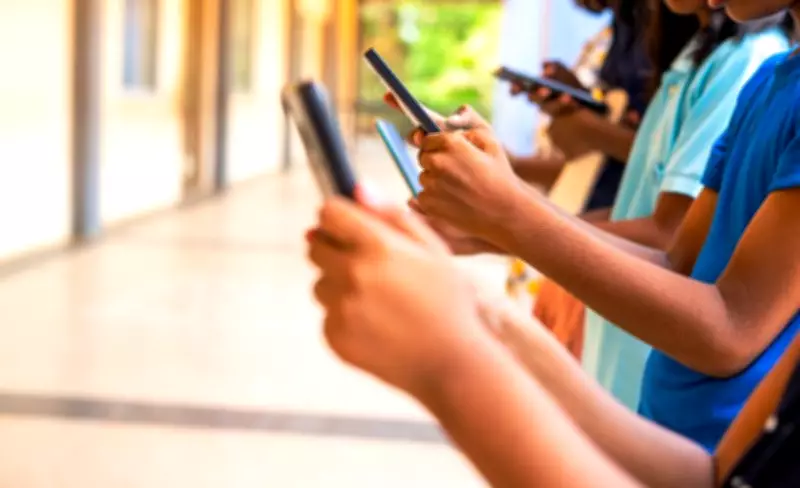
British Prime Minister Keir Starmer is set to announce a social media ban for young teenagers on Monday, aiming to protect children from harmful content and excessive screen time. The move positions the United Kingdom as a leader in a growing global movement to tighten online safety for minors.
Global Context
Countries including Australia, Canada, Brazil, and Indonesia have already introduced legislation or announced age-based restrictions for children's access to social media. France, Spain, Denmark, Thailand, and South Korea are studying or developing similar approaches.
Starmer's Stance
"How we keep kids safe online is one of the biggest debates of our time," Starmer said in a statement released Sunday. "This is a choice about whose side we're on: families across the country, or a status quo that isn't working." Starmer, facing pressure from his own party over perceived poor leadership, described the action as "world-leading" and suggested it would be more prohibitive than Australia's ban on social media for children under 16.

Scope of the Ban
The under-16 ban would apply to major platforms including TikTok, Instagram, Facebook, X, YouTube, Snapchat, Threads, Twitch, Kick, and Reddit, according to The Sunday Times. The report also indicated that the UK would restrict chatbots, features on some gaming apps, and impose a curfew to prevent older teens from late-night scrolling.
Public Consultation
The decision follows a public comment period that garnered 116,000 responses from parents, the tech industry, and children. This was the second-highest response rate after the consultation on equal marriage in 2012. Culture Secretary Lisa Nandy stated that the vast majority of respondents, including youths, supported an under-16 ban. However, she emphasized that a ban should be part of broader measures. "I don't think banning social media on its own is the silver bullet solution, but I do think Australia has shown very clearly that it has a significant role to play," Nandy told BBC on Sunday.
Potential Tensions with the US
The ban could further strain relations with the United States. The US Embassy in London warned that regulations should be narrow and not violate free speech protections, expressing concern that the rules would place greater burdens on American technology companies.
Expert Concerns
Jon Crowcroft, a communications systems professor at the University of Cambridge, cautioned that supporters of social bans are well-meaning but potentially misguided. He argued that such changes could prevent children from accessing necessary sites and might drive some users to worse platforms. "Policing devices is close to impossible technically," Crowcroft said. "Policing platforms is far easier, if only regulators would bother."






