

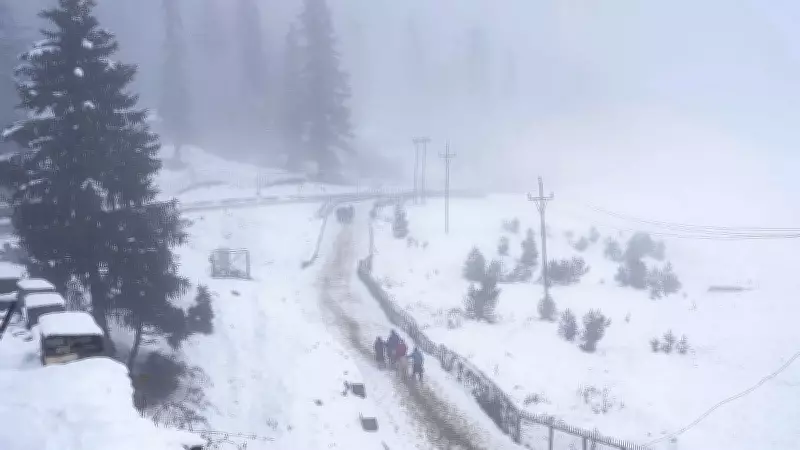
In a rare meteorological event, Kashmir witnessed snowfall in the month of May, providing much-needed relief to tourists who were fleeing the scorching heatwave prevailing in other parts of the country. The unexpected precipitation, which blanketed higher reaches and even some lower-lying areas, was described as highly unusual by officials from the Meteorological Department.
Unseasonal Weather Pattern
According to the Meteorological Department, the snowfall at this time of the year is atypical and has been attributed to a fresh western disturbance affecting the Jammu and Kashmir region. Western disturbances are extratropical storms that originate in the Mediterranean region and bring winter rainfall and snowfall to the Indian subcontinent. However, their occurrence in late May is uncommon.
Impact on Tourism
The sudden change in weather has been a welcome surprise for tourists who had traveled to Kashmir to escape the heatwave gripping the plains. Many visitors expressed delight at experiencing snowfall during a time typically associated with spring and early summer. Local hoteliers and tour operators reported an uptick in inquiries and bookings as news of the snowfall spread.

Tourist Mohammad Aslam, who arrived from Delhi, said, 'We came here expecting pleasant weather, but this snowfall is a bonus. It is a memorable experience.'
Agricultural and Local Concerns
While tourists celebrated the unusual weather, local farmers expressed concerns about potential damage to crops, especially fruit orchards that are in bloom. The Kashmir Valley is known for its apple, cherry, and almond orchards, and unseasonal snowfall could adversely affect yields. Officials advised farmers to take precautionary measures to protect their crops.
The Meteorological Department has predicted that the western disturbance will gradually weaken, leading to an improvement in weather conditions over the next few days. However, they have warned of possible landslides and temporary disruptions in higher altitude areas.
This unusual weather event has once again highlighted the impact of climate change on traditional weather patterns, with experts calling for greater preparedness for such anomalies in the future.






