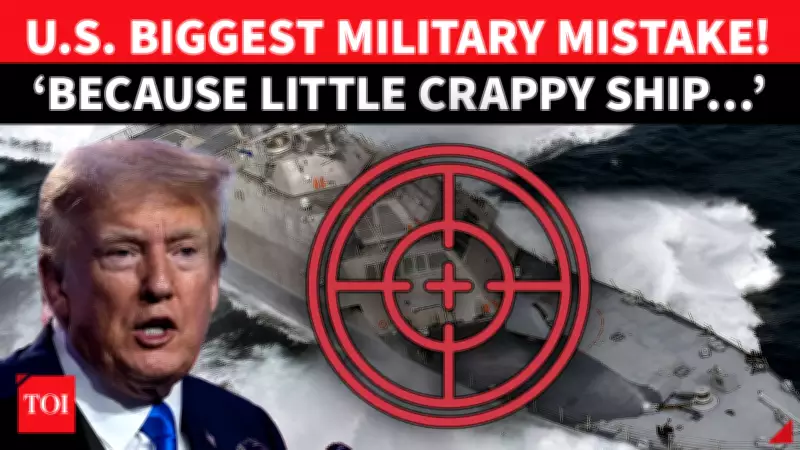
The USS Cleveland, the final Littoral Combat Ship (LCS), has officially entered service, closing a controversial chapter for the US Navy marked by ambition, frequent breakdowns, and soaring costs. Designed for coastal warfare, the LCS program was intended to deliver fast, flexible vessels vital for modern conflicts, including rising tensions in the Persian Gulf and Iran-related flashpoints. However, critics have derided the ships as “Little Crappy Ships,” citing persistent failures, weak defenses, and serious questions about survivability in drone and missile-heavy warzones.
A Troubled Legacy
The LCS program, once hailed as a revolutionary approach to naval warfare, has been plagued by mechanical issues, cost overruns, and performance shortfalls. The USS Cleveland’s commissioning marks the end of an era, but the fleet’s future remains uncertain. Analysts warn that as Iran and regional conflicts escalate, these vessels may struggle in real combat, exposing a costly gamble in an increasingly volatile global security landscape.
Design and Capabilities
The LCS was conceived to operate in shallow waters close to shore, countering threats such as mines, submarines, and small boats. Its modular design allows for mission-specific packages, including anti-submarine warfare, mine countermeasures, and surface warfare. Despite these innovations, the ships have faced criticism for their lightweight construction, limited armor, and reliance on speed over firepower.

Operational Challenges
In recent years, the LCS fleet has experienced numerous engineering failures, including propulsion problems and hull cracks. These issues have led to extended maintenance periods and reduced operational availability. Furthermore, the ships’ defensive systems are considered inadequate against advanced anti-ship missiles and drones, which are increasingly prevalent in potential conflict zones like the Persian Gulf.
Geopolitical Context
The entry of the USS Cleveland comes at a time of heightened tensions between the United States and Iran. Recent incidents, including Iranian missile strikes on a US base in Kuwait and attacks on American-linked ships near the Strait of Hormuz, underscore the volatile environment. The LCS’s ability to operate effectively in such scenarios is doubted by many experts, who question whether the fleet can contribute meaningfully to deterrence or combat operations.
Analyst Perspectives
Defense analysts have expressed skepticism about the LCS’s combat viability. “These ships were designed for a different era,” said one expert. “In a conflict with a sophisticated adversary like Iran, they would likely be vulnerable to saturation attacks from drones and missiles.” Others point to the Navy’s own admission that the LCS lacks the survivability features of larger warships, such as layered defense systems and redundant damage control capabilities.
Future of the Fleet
With the delivery of the USS Cleveland, the Navy now operates a total of 35 LCS vessels. Plans to decommission some early ships have already been announced, reflecting the program’s troubled history. The Navy is exploring options to enhance the fleet’s capabilities, including upgrades to electronic warfare systems and the integration of new missiles. However, budget constraints and competing priorities may limit these efforts.
As the US Navy closes this controversial chapter, the big question remains: can the LCS fleet overcome its shortcomings and prove its worth in an era of great-power competition and regional instability? The answer may determine not only the fate of these ships but also the Navy’s approach to future littoral warfare.