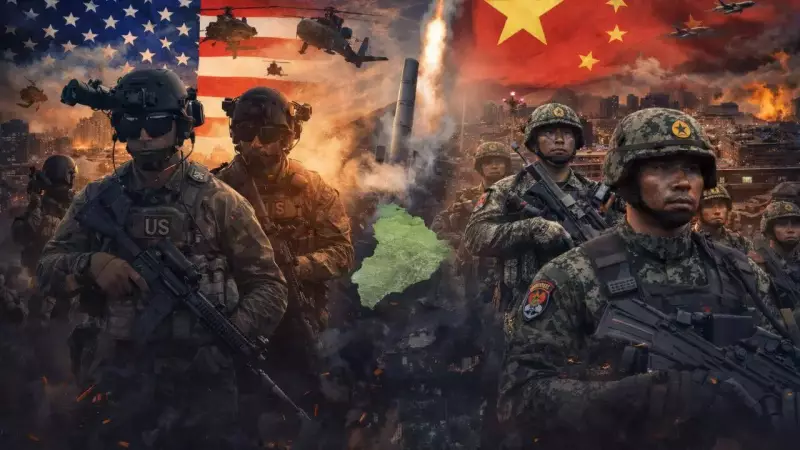
The stunningly precise United States military operation that extracted Venezuelan leader Nicolas Maduro from Caracas in under three hours on January 3 has ignited intense debate within Chinese strategic circles. The event has led many to question why China, despite its massive military modernization, could not execute a similar "decapitation strike" against Taiwan, which Beijing claims as its own territory.
The Core Asymmetry: Integration Over Firepower
According to a detailed report in the South China Morning Post (SCMP), the Maduro operation highlighted a critical asymmetry in the US-China military rivalry. Washington's edge is no longer just about having better stealth fighters or missiles, but about a deeply ingrained institutional integration that China currently lacks. While China's People's Liberation Army (PLA) boasts advanced hardware, including stealth fighters and a modern navy, it struggles with the organizational architecture needed for ultra-precise, politically sensitive missions requiring flawless joint execution.
This gap fundamentally shapes how China would approach high-end coercion, especially concerning Taiwan. Any attempt by Beijing to replicate the Caracas raid would likely be slower, louder, and far more destructive.

Why China's Military Structure Holds It Back
The US operation was a masterclass in all-domain operations, seamlessly blending intelligence, cyber warfare, electronic jamming, air power, and special forces. In contrast, China's military, despite possessing many of these components individually, cannot fuse them into a single, agile system. A key structural flaw is the fragmentation of its elite units.
Unlike the US's unified Special Operations Command, China deliberately scatters its special forces across different services—within ground armies, the navy's marine corps, the air force, and even regional commands in Xinjiang and Tibet. Analysts suggest this is a deliberate political choice by the Chinese Communist Party to prevent any single military commander from accumulating too much autonomy, a move that prioritizes political control over operational efficiency.
As a result, even the PLA's estimated 20,000 to 30,000 special operations personnel remain embedded in bureaucratic chains designed for conventional warfare, not lightning-fast strategic raids. Dennis Wilder, a former CIA official, noted that China "does not have the equivalent of Seal Team Six or Delta Force for this kind of strategic insertion."
The Intelligence and Experience Deficit
Perhaps the most significant hurdle for China is intelligence fusion and real-world combat experience. The Maduro raid was the product of months of meticulous human intelligence and surveillance, creating a near-minute-by-minute picture of the target's movements. This intelligence was then fed directly into operational planning through decades-refined interagency cooperation.
Taiwan presents a monumentally harder target. With mandatory military service, a vigilant security apparatus, and decades of counterintelligence work aimed at Beijing, achieving the same depth and real-time accuracy would be extremely difficult for Chinese agencies.
Furthermore, the US special operations community has honed its tactics through real combat in Afghanistan and Iraq, building an invaluable institutional memory. The Pentagon assesses that the PLA, despite extensive training, "lacks real-world combat experience" in complex joint operations. Missions like counter-piracy patrols do not equate to penetrating the defended airspace of a modern metropolis to capture a political leader.
What a Chinese "Decapitation" Strike Might Actually Look Like
The inability to conduct a surgical raid does not leave China without coercive options. Pentagon assessments suggest Beijing would more likely pursue "decapitation" effects through long-range missile strikes, cyber attacks, and large-scale air assaults.
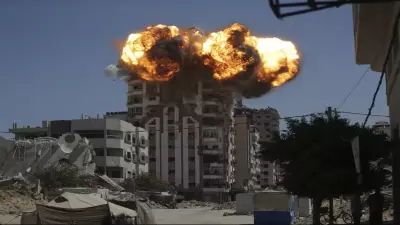
This implies that instead of a silent night raid by a small team, a Chinese attempt to neutralize Taiwan's leadership could resemble a massive barrage of cruise missiles or a overwhelming air assault—tactics that would destroy the target but also cause significant collateral damage and invite immediate global condemnation.

The bottom line is clear: The US succeeded in Caracas because of a system built and stress-tested over decades. China has modern weapons and growing ambition, but it lacks the integrated organizational ecosystem that allows all elements to move as one. Until Beijing is willing to trade some political control for operational autonomy—a trade-off it has consistently rejected—the precision gap exposed by the Venezuela operation will likely remain.