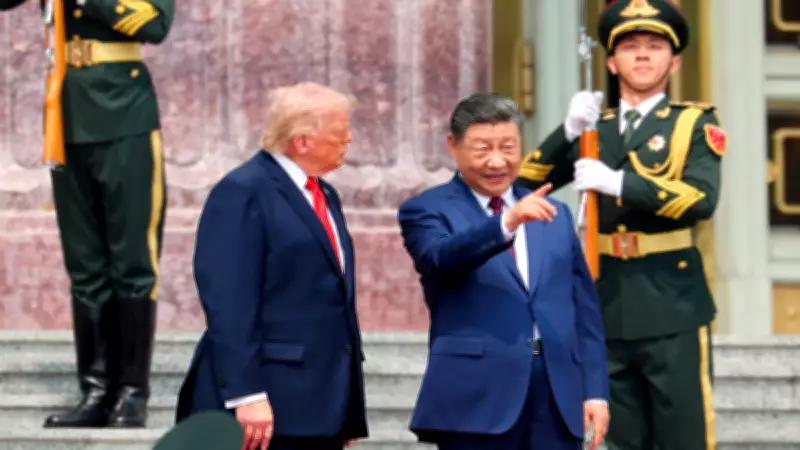
Chinese President Xi Jinping issued a stark warning to US President Donald Trump during their meeting in Beijing, stating that mishandling the Taiwan issue could lead to direct conflict between the United States and China. The high-stakes meeting, held at the Great Hall of the People, underscored the deep divisions between the two superpowers over Taiwan, a self-governing island that China claims as its own territory.
Xi's Strong Stance on Taiwan
President Xi emphasized that Taiwan is an inalienable part of China and that any deviation from the One-China principle would be met with resolute opposition. He warned that if the United States continues to interfere in the Taiwan Strait, it could trigger a serious crisis that neither side would benefit from. Xi's remarks were seen as a direct response to recent US actions, including arms sales to Taiwan and high-level visits by US officials.
Trump's Response
President Trump, in turn, reiterated the US commitment to the One-China policy but stressed the need for a peaceful resolution to the Taiwan issue. He acknowledged the sensitivity of the matter but did not offer any specific concessions. The meeting, which lasted over two hours, also covered trade disputes, North Korea, and other global issues.

Broader Implications
The exchange highlights the fragile state of US-China relations, which have been strained by trade wars, technology competition, and geopolitical rivalries. Analysts believe that Xi's warning signals China's growing assertiveness on territorial issues and its unwillingness to compromise on core interests. The Taiwan Strait remains one of the most volatile flashpoints in the world, with both sides maintaining a delicate balance of military posturing and diplomatic engagement.
International Reactions
International observers have expressed concern over the escalating rhetoric. The European Union and several Asian nations called for restraint and dialogue. Taiwan's government, meanwhile, reiterated its commitment to maintaining the status quo while seeking peaceful exchanges. The meeting concluded with a joint statement reaffirming the importance of stable bilateral relations, but no concrete agreements were reached on the Taiwan issue.